
The scriptural case is stronger than most people realize.
The Lord Jesus Himself teaches graduated judgment. The servant who knew his master’s will and refused receives “many stripes”; the one who didn’t know receives “few” (Luke 12:47–48). He warns that it will be “more tolerable” for Sodom in the day of judgment than for the cities that saw His miracles and refused to repent (Matthew 11:24). If punishment comes in degrees, many and few, more tolerable and less tolerable, then it is measured, not flat and undifferentiated.
He also uses the word “until” in ways that imply an end. The unmerciful servant is delivered to the tormentors “until he should pay all that was due” (Matthew 18:34). The debtor is imprisoned “till you have paid the last penny” (Matthew 5:26). Real suffering, real confinement, but with an end, not endless.
Paul confirms the same understanding. God “will render to each one according to his deeds”, to some, life in the Age to Come; to others, “indignation and wrath, tribulation and anguish, on every soul of man who does evil, of the Jew first and also of the Greek” (Romans 2:6–9). Judgment is according to works, according to light, without partiality. Those nearest the light bear greater accountability.
The Greek word the Lord Jesus uses for “punishment” in Matthew 25:46 is kolasis (κόλασις), a word that originally meant corrective pruning. And the adjective aiōnios (αἰώνιος) means “of the age,” not “eternal” in the abstract philosophical sense. Kolasis aiōnios is punishment belonging to the coming age, age-lasting, not timeless.
Isaiah confirms the purpose: “When Your judgments are in the earth, the inhabitants of the world will learn righteousness” (Isaiah 26:9). Judgment teaches. The Prophets consistently join tearing to healing: “He has torn, but He will heal us; He has stricken, but He will bind us up” (Hosea 6:1).
And it all ends in restoration. Paul’s sequence in 1 Corinthians 15:23–28 moves through ordered stages, Christ the firstfruits, the faithful at His appearing, then “the end” when death, the last enemy, is destroyed, and culminates in God being “all in all.” Peter calls it “the times of restoration of all things, which God has spoken by the mouth of all His holy prophets since the world began” (Acts 3:21).
So: judgment is real and severe. It is proportioned to light. It belongs to the Age to Come. It has a purpose, to teach righteousness and destroy corruption. And it ends when death is abolished and God is all in all. That’s the biblical pattern, from Torah to Prophets to the Lord Jesus to the Apostles.
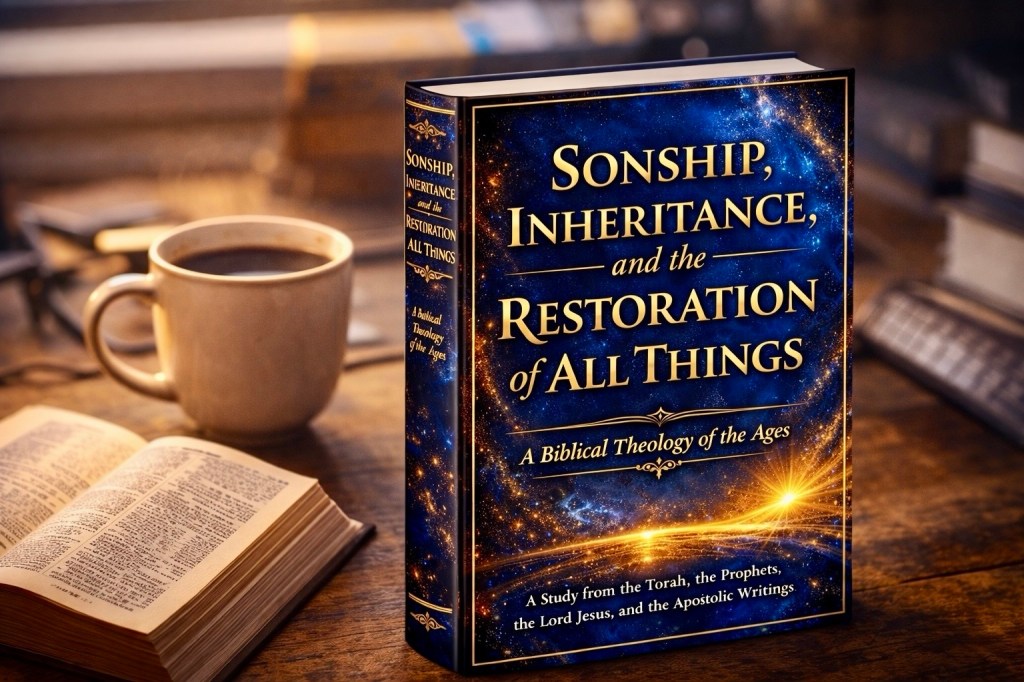
If you’re interested in delving deeper into this topic, you can read Sonship, Inheritance, and the Restoration of All Things for free here: https://restorationtheologypress.com.
 Restoration Theology Press