
By A Follower of the Lord Jesus Christ
Sonship, Inheritance, and the Restoration of All Things
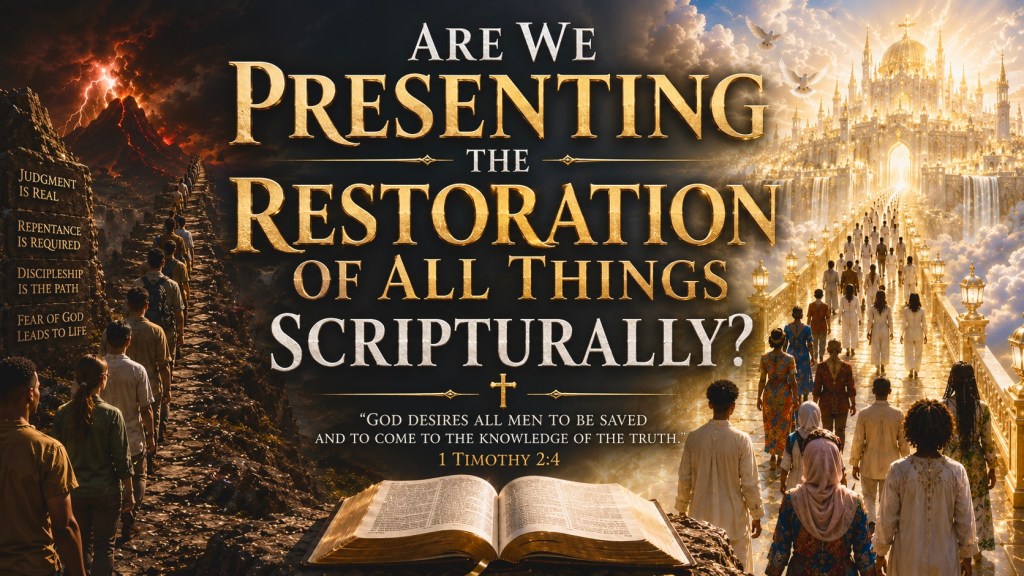
Before the foundation of the world, the Father conceived a purpose: to bring many sons to glory, to conform them to the image of His Firstborn, and to seat them as a Royal Priesthood in the Heavenly Jerusalem. Sonship, Inheritance, and the Restoration of All Things traces that purpose through the entire canon of Scripture—Torah, Prophets, the Lord Jesus, and the Apostolic writings—revealing the ordered ages through which God accomplishes His plan. From creation’s design through the Fall, the covenants, the calling of Israel, and the finished work of Christ, the book unfolds the story of the ages: this present evil age of testing and formation; the Seventh Day, when the earth becomes Gehenna and every remaining corruption is judged; and the Eighth Day, when death is abolished, the nations are restored, and God becomes all in all. Along the way, it recovers doctrines long obscured—the salvation of the soul, the gift and the prize, the three categories of humanity at the resurrection, the fate of the fallen powers, and the triumph of mercy over judgment. The fires of divine judgment are real and searching, but they are finite, purposeful, and preparatory. No nation lies beyond God’s mercy. No judgment is His final word. The result is a comprehensive biblical theology that restores sobriety where there has been fantasy, reverence where there has been presumption, urgency where there has been complacency, and hope where there has been dread.
TABLE OF CONTENTS
What if the Bible tells a single, coherent story, from Genesis to the Apostles, about a Father forming a family of priestly sons who share the inheritance of His Firstborn? This book recovers that story. Drawing exclusively from the Torah, the Prophets, the Lord Jesus, and the Apostolic writings, it traces God’s eternal purpose through ordered ages: creation, fall, covenant, redemption, judgment, and the restoration of all things. The Preface introduces the book’s method, its canonical foundations, and the invitation to hear the Scriptures afresh.
The purpose of this book is both simple and demanding: to hear the whole counsel of God on resurrection, judgment, and restoration. This Introduction sets out the method, listening to the Scriptures in the order God gave them, from Torah through the Apostolic writings, and the structure the reader will encounter: creation, fall, covenant, priesthood, the person and work of Christ, the ages, Gehenna, the Heavenly Jerusalem, and the Eighth Day. It explains how to read the book, addresses the decision to exclude Revelation from doctrinal use, answers whether this teaching contradicts orthodoxy, and extends an invitation to hear the Lord Jesus again with fresh ears and a Berean spirit.
Chapter 1 – The Purpose of the Ages
Scripture does not speak of a single, undifferentiated “eternity” but of multiple ages, each with its own character and purpose. This chapter establishes the foundational framework of the entire book: God’s eternal counsel, conceived before the ages and executed through them, moving from creation through judgment to the restoration of all things in Christ. The Hebrew and Greek vocabulary of the ages—aiōn, ʿolam, aiōnios—is examined and its meaning anchored in the biblical pattern.
Chapter 2 – The Purpose of Creation and the Destiny of Humanity
Creation is not merely the backdrop for redemption; it is the prophetic pattern of human destiny. This chapter traces the creation week as a foreshadowing of the ages, Eden as a garden-sanctuary anticipating the Heavenly Jerusalem, and Adam and Eve as prototypes of Christ and the Church of the Firstborn. The image of God, the royal-priestly vocation, and creation’s groaning toward the glory of the sons of God are all set in place here.
Chapter 3 – The Fall, the Corruption of the Earth, and the Rise of Satanic Rule
The Fall shattered creation’s harmony and introduced the reign of sin, death, and the rebellious spiritual powers. This chapter examines the serpent’s deception, what was lost and what remains in the image of God, the disordering of the soul, and the spread of corruption across the earth. Yet even in judgment, the first promise of redemption appears: the protoevangelium of Genesis 3:15, the garments of skin as the first sacrifice, and the declaration that the ages of judgment and restoration are necessary.
Chapter 4 – Noah, the Flood, and the Pattern of Judgment and Restoration
The Flood is the Bible’s first great act of worldwide judgment, and its first great picture of salvation through judgment. This chapter examines the pre-flood rebellion of the “sons of God,” Noah’s righteousness and its limits, the Noahic covenant as the permanent baseline of divine mercy, and the Flood as a type of the Seventh Day judgment. Three trajectories appear in seed-form: Enoch (the faithful taken before judgment), Noah (the righteous preserved through it), and the perishing world (destroyed yet not beyond God’s ultimate purpose).
Chapter 5 – Babel and the Disinheritance of the Nations
At Babel, humanity united in collective defiance, and God responded with a judgment that reshaped the spiritual order of the world. This chapter traces the scattering of the nations, the allocation of peoples to angelic rulers (Deuteronomy 32:8–9), the indictment of the Divine Council in Psalm 82, and the descent of the nations into idolatry. The Babel event created the geopolitical and spiritual architecture of “this present evil age”, and set the stage for Abraham, through whose Seed the disinherited nations would one day be reclaimed.
Chapter 6 – Abraham, the Covenant , and the Reversal of Babel
Into a world of scattered, disinherited nations, God called one man. This chapter shows how the Abrahamic covenant is a precise reversal of every dimension of the Babel catastrophe: where Babel grasped for a name, God gave Abraham a name; where Babel built a city, Abraham waited for the city whose builder is God. Through Abraham’s faith, priesthood, and intercession, the covenant trajectory toward the restoration of all nations is launched, and the seed of the Royal Priesthood is planted.
Chapter 7 – Israel, the Old Covenant, and the Failure of the Firstborn Son
Israel was called to be a kingdom of priests and a holy nation, the firstborn son among the peoples. This chapter traces how the Sinai covenant tested and exposed the nation’s inability to bear the firstborn calling in Adamic flesh. From the golden calf to the exile, Israel’s failure is not accidental but revelatory: it demonstrates that the dominion mandate requires a new kind of humanity, born of the Spirit and conformed to the image of a faithful Firstborn Son.
Chapter 8 – How the New Testament Reinterprets the Old Testament
The Apostles did not read the Old Testament the way most modern readers do. This chapter examines the apostolic hermeneutic, how Christ is the center and fulfillment of Scripture, how the Lord’s own method of reading the Torah and the Prophets governs the Apostles’ exegesis, and how land, city, temple, kingdom, and the Day of the Lord are reinterpreted in light of the resurrection and exaltation of the Lord Jesus.
Chapter 9 – The New Covenant and the Faithful Firstborn Son
The Old Covenant exposed the problem; the New Covenant supplies the remedy. This chapter traces the prophetic promise of a new covenant (Jeremiah 31; Ezekiel 36), the Lord Jesus as the faithful Firstborn Son who fulfills what Israel could not, and the New Covenant’s transforming power, writing the law on the heart, forgiving sin, and forming a priesthood. The two outcomes of the resurrection and the formation of the Royal Priesthood are both grounded in the New Covenant’s unbreakable work.
Chapter 10 – The Reformation of the Lord Jesus
The coming of the Lord Jesus did not merely adjust the Old Testament system; it reformed everything. This chapter traces how He fulfilled the Torah, replaced the Levitical sacrifices with His once-for-all offering, transferred the priesthood from Aaron to Melchizedek, relocated the sanctuary from earth to heaven, and reconstituted the kingdom as heavenly enthronement rather than earthly replica. The Reformation accomplished in Christ is the turning point of redemptive history.
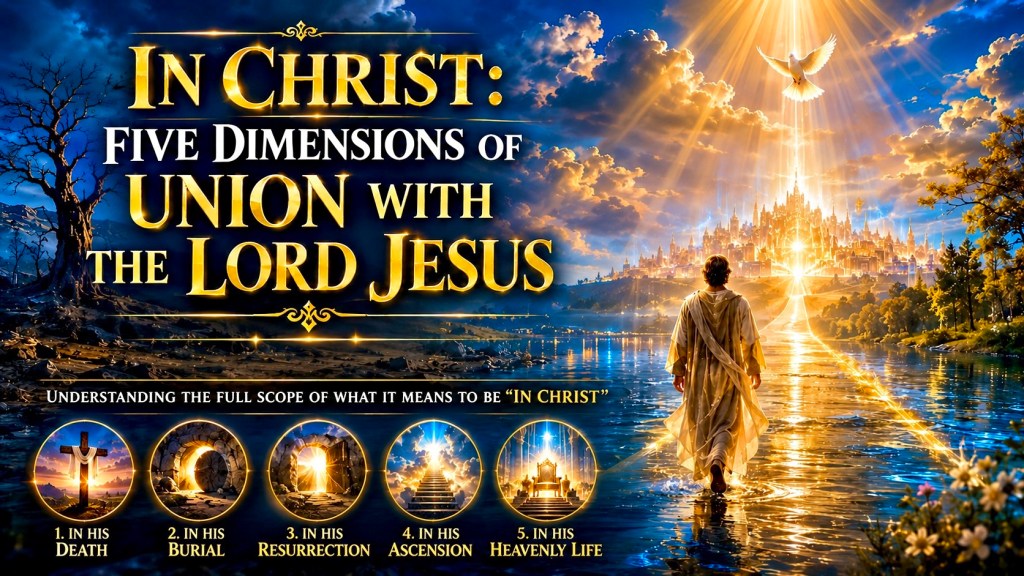
Chapter 11 – The Believer’s Union in the Finished Work of Christ
Union with Christ is the foundation of the Christian life. This chapter unfolds the mystery hidden for ages: what it means to be “in Christ”, transferred from Adam’s headship, united with Christ in His death, raised with Him in His resurrection, and seated with Him in the heavenly places. From individual union to the corporate reality of the Body of Christ, this chapter shows that every blessing, every calling, and every fruit of the ages flows from the believer’s living union with the Firstborn Son.
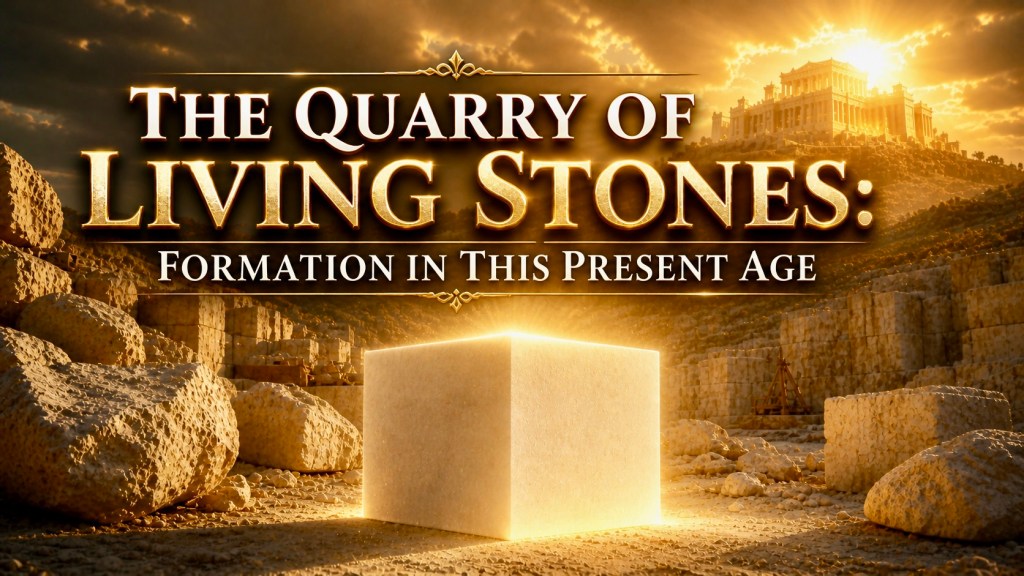
Chapter 12 – The Church in this Age: The Quarry of Living Stones
The Church in this present age is not the finished Temple but the quarry where living stones are being shaped, cut, and prepared. This chapter draws on the pattern of Solomon’s Temple, where stones were finished at the quarry so that no sound of hammer or chisel was heard at the building site, to explain the Father’s present work of discipline, pruning, and formation. The true Temple will be assembled in glory at the resurrection of life.
Chapter 13 – The Final Crisis Before the Appearing of Christ
Before the Lord Jesus appears, a final crisis will grip the earth. This chapter traces the biblical portrait of that crisis from Daniel’s visions through the Lord’s Olivet Discourse to the Apostle Paul’s teaching on the man of sin. The fourth kingdom’s remnant, the desecration of the sanctuary, the great tribulation as Israel’s covenant judgment, and the Church’s experience of deception and spiritual negligence are examined, all culminating in the instant and decisive appearing of the Lord Jesus.
Chapter 14 – The Coming of the Lord Jesus
The appearing of the Lord Jesus is the event toward which all Scripture moves. This chapter traces the Old Testament theophanies, the Lord’s own teaching that His coming will be visible, sudden, and universal, the transfiguration as a preview of His glory, and the apostolic witness that His appearing ends the present evil age, raises the dead, glorifies the faithful, and inaugurates the Day of the Lord. It is the climactic hinge of the ages.
Chapter 15 – The Day of the Lord
The Day of the Lord is not a single moment but an entire age, the Seventh Day of divine fire in which all remaining corruption is brought under judgment. This chapter traces the Day from its Torah foundations at Sinai, through the prophetic announcements of Isaiah, Joel, Zephaniah, and Malachi, into the Lord’s teaching and the apostolic writings. The sabbath pattern, the separation of faithful and unfaithful, and the earth’s transformation into Gehenna are all established here.
Chapter 16 – Why Revelation Cannot Shape Christian Eschatology
The Book of Revelation was widely disputed in the early Church and introduces concepts, structures, and imagery that contradict the consistent teaching of the Lord Jesus and the Apostles. This chapter examines the historical, literary, and doctrinal reasons why Revelation cannot serve as the foundation for Christian eschatology, and why the Torah, the Prophets, the Lord Jesus, and the Apostolic writings provide a complete and coherent eschatological framework without it.
Chapter 17 – The Seventh Day and the Error of an Earthly “Millennium”
The popular doctrine of an earthly millennium, a golden age of Christ reigning from Jerusalem before the final judgment, has no foundation in the Torah, the Prophets, the Lord Jesus, or the Apostolic writings. This chapter traces the Seventh Day as the sabbath age of fire, judgment, and purification, clears the confusion sown by Revelation’s isolated thousand-year passage, and recovers the biblical pattern: one appearing, one resurrection, one judgment, and a Seventh Day governed by the Heavenly Jerusalem above an earth under divine fire.
Chapter 18 – The Doctrine of the Resurrection
The resurrection is the pivot of the ages, the hinge upon which God’s entire redemptive purpose turns. This chapter traces the doctrine from its seeds in the Torah, through its development in the Prophets, into the Lord Jesus’ explicit teaching and the Apostles’ foundational proclamation. Without the resurrection, there is no hope, no judgment, no priesthood, and no restoration. With it, every promise of God finds its fulfillment.
Chapter 19 – The Saints and the Heavenly Court
At the appearing of the Lord Jesus, a heavenly court convenes. This chapter traces the manifestation of that court, the glorified saints as the restored Divine Council, the binding of the tares and the casting down of fallen powers, the ascension of the faithful into the Heavenly Jerusalem, and the thrones of judgment from which the Seventh Day is administered. The heavenly court session is the hinge between the appearing and the ordered judgments of the Age to Come.
Chapter 20 – The Royal Priesthood
Priesthood is the destiny of divine sonship. This chapter traces the priestly calling from Adam through the Torah’s consecration patterns, through the failure of Aaron and the Levites, to its fulfillment in Christ the Melchizedekian Priest-King. The Royal Priesthood of the faithful, the outer-court priesthood of the restored unfaithful, and the priestly ministry to the nations in both the Seventh and Eighth Days are distinguished and developed. Priesthood is not an honorary title; it is the vocational inheritance for which the Father is forming His sons.
Chapter 21 – The Firstborn Inheritance
The firstborn inheritance is the prize set before every believer, the double portion, the father’s blessing, the ruling share in the Father’s household. This chapter traces the divine pattern of the firstborn from the Torah through the Prophets and Psalms to its fulfillment in Christ and its extension to the faithful. The call is universal, but the inheritance is conditional: only those who walk as faithful sons and daughters in this age will share the Firstborn’s glory in the Age to Come.
Chapter 22 – Walking in the Power of the Holy Spirit
The Holy Spirit is the power of the coming age operating in this present age. This chapter traces the Spirit’s work from Torah to Apostles: the agent who transforms the soul, empowers obedience, intercedes in weakness, and forms the corporate Body of Christ for the Royal Priesthood. Walking by the Spirit, quenching or grieving the Spirit, failure and restoration, and the Spirit’s role in preparing sons for the firstborn inheritance are all addressed with pastoral urgency.
Chapter 23 – The Parables of the Kingdom
The parables of the Lord Jesus are His own interpretation of the ages. This chapter examines each major parable—the Sower, the Wheat and Tares, the Dragnet, the Ten Virgins, the Talents, the Wedding Feast, the Sheep and Goats, and others—showing how they reveal the structure of judgment, the mixture of faithful and unfaithful in this age, the separation at the harvest, and the conditions for entrance into the resurrection of life. The parables are not gentle stories; they are the Lord’s most searching warnings and most glorious promises.
Chapter 24 – The Demands of Discipleship
The Lord Jesus does not merely invite; He commands. This chapter gathers the demands of discipleship—total allegiance, self-denial, cross-bearing, servant-heartedness, radical mercy, purity of heart, watchfulness, and perseverance—and shows that these are not optional extras but the conditions upon which the firstborn inheritance is awarded. Every idle word will be judged. The narrow gate leads to life. The words of the Lord Jesus will judge every disciple.
Chapter 25 – Judgment Begins at the House of God
Judgment does not begin with the world; it begins with the people of God. This chapter traces the refining fire that operates within the household of faith—from the Torah’s pattern of covenant discipline, through the Prophets’ image of the Refiner, to the Lord’s pruning of every branch and the Apostle’s teaching on the fire that tests every work. Present suffering, the judgment seat of Christ, and the joy that awaits those who embrace the Father’s discipline now are all explored.
Chapter 26 – Light, Accountability, and the Judgment of Believers
Those who receive greater light bear greater accountability. This chapter develops the principle that judgment is measured according to truth and privilege—from the Torah’s covenant accountability, through the Prophets’ warning “You only have I known,” to the Lord Jesus’ teaching on many and few stripes, and the severe warning of Hebrews 10. The distinction between the discipline of unfaithful sons and the wrath reserved for the ungodly is carefully maintained.
Chapter 27 – Life and Judgment in the Age to Come
“I have set before you life and death.” This chapter traces the Torah’s two ways into the structure of the ages, showing how the language of aiōn, ʿolam, and aiōnios maps onto the Seventh Day and the Eighth Day. Life in the Age to Come is the destiny of the faithful; age-lasting punishment is the portion of the unfaithful and ungodly. Sowing and reaping in this age determine the harvest in the next. The Seventh Day and the Eighth Day are both ages to come, and both are governed by the mercy of God.
Chapter 28 – Salvation of the Soul
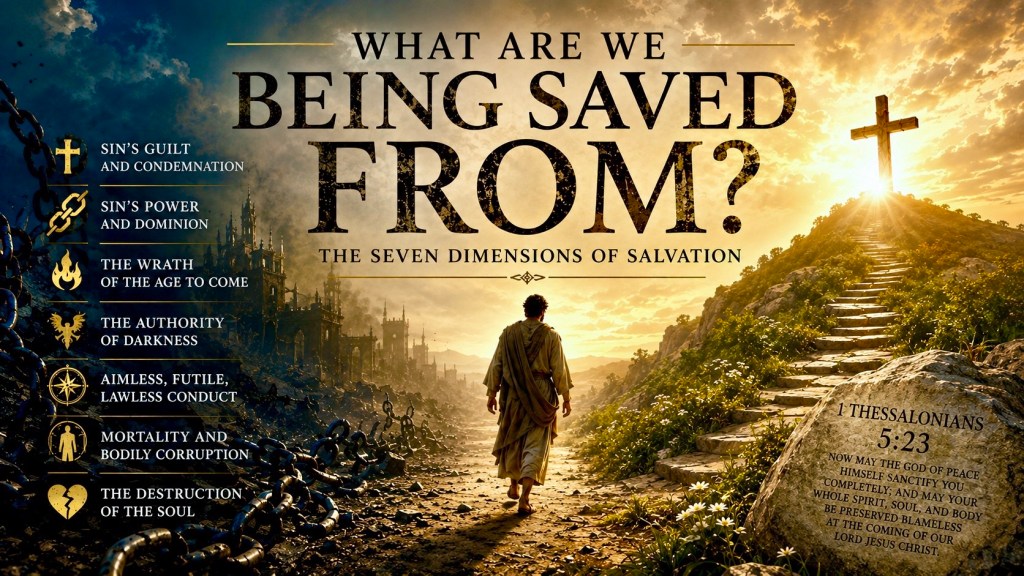
The salvation of the soul is the neglected doctrine at the center of the apostolic gospel. This chapter traces the biblical nature of the soul, nephesh in Hebrew, psychē in Greek, and shows that the soul can be saved, lost, or destroyed. The Torah’s foundations, the prophetic witness, the Lord Jesus’ teaching, and the apostolic writings all converge: the soul is saved through obedience, endurance, and the transforming work of the Spirit in this present age. Its salvation determines the believer’s portion in the Age to Come.
Chapter 29 – Biblical Nature of the Soul
What is the soul, and why must it pass through death and re-creation? This chapter provides the biblical anthropology that undergirds the entire theology of judgment and restoration. Body, soul, and spirit are traced through the Torah’s sanctuary pattern, the Prophets’ witness, and the apostolic teaching. The soul’s corruption, its judgment in Gehenna, the return of the spirit to God, and the necessity of resurrection for the re-creation of the whole person are all carefully established.
Chapter 30 – The Passing of the Heavens and the Transformation of Earth
At the appearing of the Lord Jesus, the corrupted heavens of this creation dissolve and the earth is transformed. This chapter traces the structure of the biblical heavens, the Torah’s foundations in the firmament and the Flood, the Prophets’ announcements of cosmic dissolution, and the apostolic teaching on the Day of God. The Third Heaven is revealed above; the earth below becomes Gehenna for the Seventh Day; and the Eighth Day brings new heavens and a new earth.
The Day of Wrath is the moral center of the ages—the moment when the righteous judgment of God is fully revealed. This chapter traces the wrath of God according to truth and works (Romans 2:1–11), the differentiated judgments upon the faithful, the unfaithful, and the ungodly, and the pastoral call to walk worthy in light of the coming Day. Divine wrath is not arbitrary rage; it is the holy severity of a God whose mercy operates through judgment toward restoration.
Chapter 32 – The Heavenly Jerusalem
The Heavenly Jerusalem is at once a city, a mountain, a paradise, and the Father’s house, the dwelling place of God and the center of the renewed creation. This chapter traces these images from Eden through the Torah’s tabernacle, the Prophets’ visions of Zion, the Lord Jesus’ teaching on the Father’s house, and the apostolic witness to the city above. In the Seventh Day it is revealed over an earth under judgment; in the Eighth Day it stands as the light of the nations and the throne of God with His people.
Chapter 33 – Death, Destruction, and the Meaning of Divine Judgment
The Bible uses the words “death” and “destruction” in ways that differ sharply from popular assumptions. This chapter recovers the biblical meaning of these terms: death as the termination of embodied life, not the extinction of the person; destruction as the removal of corruption, not the erasure of identity. From the Torah’s consuming fire to the Apostles’ refining flame, divine judgment is shown to be purifying, purposeful, and bounded—preparing the way for the restoration that follows.
Chapter 34 – The Unpardonable Sin
The Lord Jesus’ warning about the sin against the Holy Spirit is the most severe statement in all of Scripture. This chapter carefully traces the Torah’s pattern of high-handed sin, the Prophets’ witness to judicial hardening, the precise context of the Lord’s warning, and the apostolic teaching in Hebrews and 1 John. “Not forgiven in this age nor in the Age to Come” means the Seventh Day offers no forgiveness for this sin, but the Eighth Day lies beyond the scope of the warning, and divine mercy holds even here.
Chapter 35 – The Fear of the Lord and the Severity of God
Holy fear has all but vanished from modern Christianity, yet it stands at the foundation of wisdom and at the heart of covenant faithfulness. This chapter recovers the fear of the Lord from the Torah’s fire at Sinai, the Prophets’ summons to tremble before God, the Lord Jesus’ warnings to fear Him who can destroy both soul and body in Gehenna, and the apostolic teaching on the shaking of all things. Fear and love are the two pillars of sonship, and divine severity is the gateway to mercy.
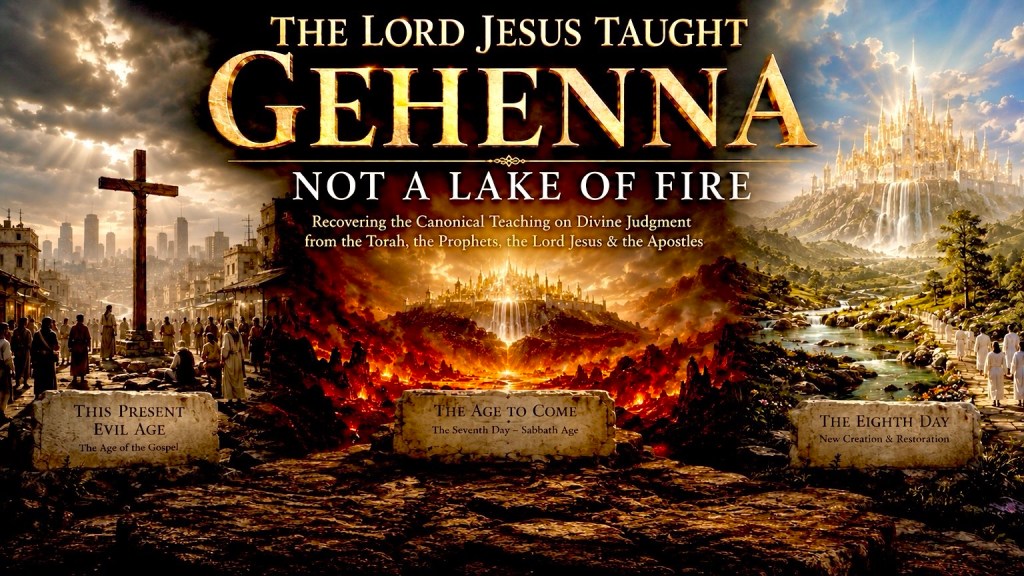
Chapter 36 – Gehenna—The Judgment of God
Gehenna is not “hell” as popular tradition imagines it. This chapter recovers the Lord’s own teaching: Gehenna is the condition of the earth under divine fire in the Seventh Day, where body and soul are destroyed under the sentence of God. The Torah’s covenant curses, the Prophets’ Valley of Hinnom, the Lord Jesus’ warnings to His own disciples, and the apostolic witness to the coming judgment all converge. Gehenna is finite, purposeful, and preparatory, the fire that destroys the Adamic nature also prepares the way for restoration.
Chapter 37 – Why Scripture Does Not Teach “Hell” as Eternal Torment
The traditional doctrine of eternal torment misrepresents the name and character of God. This chapter traces how the single English word “hell” hides four distinct biblical realities, how the mistranslation of aiōn and aiōnios distorted the Church’s eschatology, how eternal torment entered Christian thought through philosophical influence rather than scriptural warrant, and how the Torah, the Prophets, the Lord Jesus, and the Apostles consistently teach judgment that leads to restoration, not punishment without end.
Chapter 38 – Satan, the Fallen Powers, and the Fire Prepared for Them
The fallen angelic powers who have ruled the nations since Babel face their own appointed judgment. This chapter traces the adversary from Eden through the Prophets’ progressive unmasking, to the cross where the Lord Jesus disarmed the principalities, and to the Day of the Lord when the heavens dissolve and the powers are cast to the lowest pit. Their sentence is ontological demotion, dying “as men” (Psalm 82:7), and their reconciliation in the Eighth Day is real, though their former rank is never restored.
Chapter 39 – The Reign of Christ and the glorified Sons of God
The twin failures of Adam and the angelic rulers are both reversed in Christ and His glorified people. This chapter traces the Torah foundations of human dominion, the failure of the original Divine Council, the exaltation of Christ as Priest-King, and the formation of the glorified sons as a Royal Priesthood who share His reign. Present spiritual warfare is shown to be vocational preparation for future governmental authority. In the Seventh and Eighth Days, the sons reign with the Firstborn over a renewed creation.
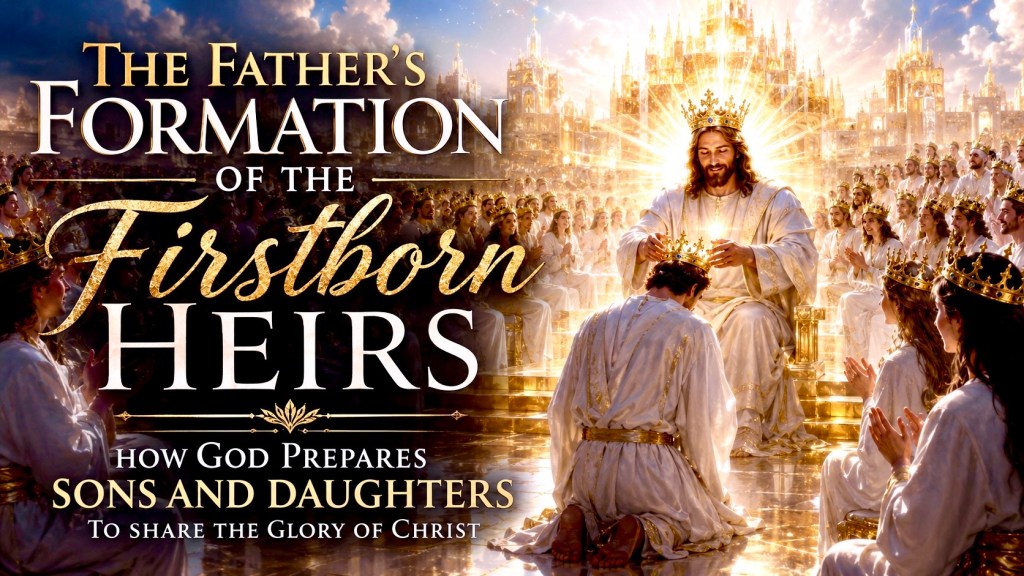
Chapter 40 – The Father’s Formation of the Firstborn Heirs
The thrones of the Age to Come are prepared by the Father, and so are those who sit upon them. This chapter traces the Father’s formative work—through the mountains of Scripture, the Joseph-Moses-Servant Songs pattern, and the quarry-to-Temple arc—showing how suffering, testing, and obedient endurance in this present age shape the sons and daughters who will share the Firstborn’s inheritance. The call is universal; the formation is particular; the placement awaits the resurrection of life.
Chapter 41 – Understanding the Gift and the Prize
Grace is the root of everything—but the Scriptures distinguish between what is freely given and what is awarded to the faithful. This chapter traces the gift-and-prize distinction from the Torah through the Prophets, the Lord Jesus’ parables, and the apostolic writings. The gift is salvation, forgiveness, and the indwelling Spirit. The prize is the resurrection of life, the Royal Priesthood, and the firstborn inheritance. The fire that tests every work at the bēma is not a future sorting but the public vindication of lives already refined by grace.
Chapter 42 – How Mercy Triumphs Over Judgment in the Ages
Mercy is not one attribute of God among many; it is the governing principle of every age. This chapter traces the mercy woven into creation and covenant, the divine name proclaimed in Exodus 34:6–7, the judgment-then-mercy pattern of the Torah, the prophetic and apostolic chorus, and the triumph of mercy in the Eighth Day. The Adam-Christ parallel, the mystery of Israel, the Savior of all men, the feast for all peoples, and the three priestly orders united in mercy are all gathered into one resounding conclusion: mercy triumphs over judgment.
Chapter 43 – The Restoration of the Nations in the Eighth Day
God’s purpose extends beyond individuals to the corporate healing and restoration of entire peoples. This chapter traces the origin of the nations in Genesis 10, the Abrahamic promise to all families of the earth, Israel’s restoration as the pattern for all nations, the shocking promise of Sodom’s restoration, the mercy shown to Nineveh, the Lord Jesus’ heart for the nations, and the prophetic vision of universal worship in the Eighth Day. No nation lies beyond God’s mercy. No judgment is His final word.
Chapter 44 – The Eighth Day and the Restoration of All Things
The Eighth Day is the theological consummation of the entire book. This chapter gathers every strand—creation, fall, covenant, redemption, judgment, and restoration—into the final vision of new heavens, new earth, and the Heavenly Jerusalem standing above a renewed creation. The three-tier priestly order, the quarry-to-Temple resolution, the abolition of death, and the fulfillment of the Father’s purpose that God may be “all in all” are set before the reader as the goal written before the ages began.
Chapter 45 – Making Your Call and Election Sure
If these things are true, how shall we live? This final chapter presses the practical question with apostolic urgency. The prize is real; the danger of forfeiting it is real; and the time to respond is now. Fixing hope on the Age to Come, pursuing the salvation of the soul, walking in the Spirit, watching and being ready, learning from the warnings of Israel and Esau, and running to obtain the resurrection of life—this chapter sends the reader into the present age with the eternal stakes clearly before them.
APPENDICES
Appendix A – The Story of the Ages: From Creation to the Eighth Day
This appendix provides a narrative overview of the entire sweep of the book—from Adam to the Eighth Day—in a single continuous reading. It gathers creation, fall, covenant, Israel, the Firstborn Son, the Holy Spirit, the Day of the Lord, Gehenna, the Heavenly Jerusalem, and the final restoration into one cohesive story. Readers may consult this appendix at any point to see the whole counsel of God at a glance.
Appendix B – A Scriptural Portrait of the Disciple of the Lord Jesus
What does a faithful disciple look like in the language of the Lord Jesus and His Apostles? This appendix gathers the scriptural marks of discipleship—following, hearing and doing, loving the Lord above all, walking in the Spirit, receiving discipline, growing in holiness, and making the call and election sure. It introduces no new doctrine but holds up the mirror of the Word so that each reader may examine their own walk in light of the resurrection of life.
Appendix C – Cut Off From His People
The Torah’s language of being “cut off” is one of the most misunderstood categories in Scripture. This appendix traces the Old Testament pattern of covenant exclusion, the Torah’s built-in grammar of restorative judgment, the Lord Jesus’ parables of exclusion, and the New Covenant meaning of being cut off. Exclusion serves holiness; restoration serves love. Even the most severe cutting off exists within a system that includes the means of return.
Appendix D – Teachers Are Judged More Strictly
“My brethren, let not many of you become teachers, knowing that we shall receive a stricter judgment” (James 3:1). This appendix examines the sacred weight of the teaching office, the greater accountability that comes with greater light, the harm of false teaching, and the fire that awaits unfaithful teachers in the Age to Come. Teaching is not a platform; it is a stewardship exercised in the fear of God.
Appendix E – The Leavening of the Kingdom
Leaven in Scripture is consistently a sign of corruption, not growth. This appendix traces the parable of the leaven, the apostolic warnings about false teaching in the last days, the mystery of lawlessness as hidden leaven, and examples of leavened teaching in the modern Church. The call is to vigilance, testing, and faithfulness to the Word until the appearing of the Lord Jesus.
Appendix F – Good Works, Grace, and the Judgment of the Age to Come
Does the Bible teach salvation by works? This appendix resolves the confusion by showing that good works are the fruit of grace, not its replacement. All—faithful, unfaithful, and ungodly—are judged according to works in the Age to Come. For the faithful, those works are the fruit of the Spirit, produced by grace through faith. For the unfaithful and the ungodly, the absence of such fruit is itself the ground of their judgment. The gift of salvation is free; the prize of the firstborn inheritance is awarded to those whose lives bear the fruit that grace was given to produce.
Appendix G – Servant Leadership and the Priestly Pattern of the Ages
“It shall not be so among you.” This appendix traces the Lord’s pattern of leadership as servanthood, the function of elders and deacons as an echo of the inner-court and outer-court priestly orders, and the principle that faithfulness—not prominence—determines one’s place in the Royal Priesthood. The wife who loved sacrificially and the worker who labored with integrity are as much candidates for the firstborn inheritance as the most gifted apostle.
Appendix H – Adam, Mortality, and the Nature of Resurrection Bodies
Was Adam immortal before the Fall? What kind of bodies will the resurrected receive? This appendix establishes Adam’s original constitution as mortal and dependent on the tree of life, traces the Last Adam’s glorified body as the pattern for celestial resurrection, and develops Paul’s distinction between celestial and terrestrial bodies in 1 Corinthians 15. The two orders of perfected humanity in the Eighth Day—celestial priestly sons and terrestrial immortal nations—are grounded in this foundational anthropology.
Appendix I – The Destiny of the Innocent and the Deathbed-Saved
What happens to infants, the mentally incapacitated, and those who turn to the Lord at the very end of life? This appendix addresses these tender questions with scriptural care, showing why the innocent and the deathbed-saved cannot remain on the earth during the Seventh Day, how they are sheltered in the Heavenly Jerusalem under Christ’s care, and what their place will be in the Eighth Day. The justice and tenderness of God govern every category of humanity.
Appendix J – The Destiny of Animals in the New Creation
Does the Bible speak to the fate of animals in the age to come? This appendix considers animals in creation and under the curse, the prophetic vision of the peaceable kingdom, the groaning and liberation of creation, and the reasonable hope that the God who remembers every sparrow will not forget the creatures He made. The answer is offered with care, hope, and appropriate restraint.
Appendix K – Salvation After Death
Is death the absolute deadline for salvation? This appendix examines the most misunderstood question in Christian theology. Death is a condition, not a final state. The gospel reaches the dead. The resurrection of judgment is the beginning of restoration, not its impossibility. The ages of God’s purpose require salvation beyond death, and the God who saves beyond the grave is the same God who proclaimed mercy at Sinai and raised the Lord Jesus from the tomb.
Appendix L – The Historical Witness to Universal Restoration
Scripture is the foundation, but history offers confirmation. This appendix surveys the early Church fathers—Alexandrian and Antiochene—who taught a form of universal restoration, traces the doctrine through the Middle Ages, the Reformation, and the English-speaking world, and shows that the hope of restoration was never fully extinguished, even when the Latin tradition moved toward eternal torment. This cloud of witnesses does not replace Scripture, but it confirms that the reading offered in this book is not novel.
Appendix M – Why Restoration Theology Resolves Major Doctrinal Confusion
Many of the Church’s longest-running debates—faith versus works, eternal security versus losing salvation, eternal torment versus annihilation, grace versus obedience, arise from the same root cause: a distorted eschatological framework. This appendix shows how the theology of the ages, when properly understood, resolves these tensions and brings clarity, unity, and coherence to doctrines that have divided Christians for centuries.
Appendix N – Frequently Asked Questions in the Light of the Ages
If God will restore all, why evangelize? Does this make sin less serious? What about justice for victims? Is this just universalism? This appendix gathers the most common questions readers bring to restoration theology and answers each one from within the framework of the ages, the resurrection, the gift and the prize, and the character of God revealed in Scripture.
Appendix O – “Unto the Age” and “Life of the Age”
The Greek phrases often translated “eternal life” and “eternal punishment” carry age-specific meaning that has been obscured by translation tradition. This appendix provides detailed lexical and exegetical analysis of how the New Testament’s age-language fits the purpose of the ages as established throughout this book.
Appendix P – Isaiah 66:22–24, Gehenna, and the Day of the Lord
Isaiah 66 is one of the most important—and most misread—passages in the eschatological debate. This appendix provides careful exegesis of Isaiah’s closing vision, showing how it describes the pattern of separation, birth, judgment, and new creation, and how its language of Gehenna corresponds precisely to the Seventh Day framework established in this book.
Appendix Q – Revelation Versus the Apostolic Pattern of the End
This appendix provides a detailed, side-by-side comparison of Revelation’s eschatological scheme with the consistent pattern taught by the Lord Jesus and the Apostles. Point by point—the appearing, the resurrection, the millennium, the judgments, the new creation—the two frameworks are shown to diverge at nearly every critical juncture, confirming that Revelation’s visionary scheme cannot govern the Church’s eschatology.
Appendix R – Patterns of Divine Appearing in the Old Testament
Every time God appeared in the Old Testament, a consistent pattern emerged: fire, cloud, shaking, overwhelming light, audible voice, and human collapse before unshielded holiness. This appendix gathers the major theophanies—Sinai, Isaiah’s temple vision, Ezekiel’s glory, and Daniel’s heavenly court, and shows how each one anticipates the final appearing of the Lord Jesus. The theophanies are not isolated events; they are rehearsals of the Day that will dawn when heaven is opened and every eye beholds the Son of Man.
Appendix S – Lightning, Clouds, and the Parousia
The Lord Jesus chose two images to describe His coming: lightning and clouds. This appendix examines both in their full biblical depth. Lightning teaches that His appearing will be instantaneous, universal, and unmistakable. Clouds teach that it will be heavenly, priestly, judicial, and boundary-crossing—the visible threshold where heaven and earth meet. Together they guard against every attempt to spiritualize the parousia into a vague “presence,” shrink it into a local event, or divide it into multiple stages.
Appendix T – False Christs, False Prophets, and the Love of the Truth
When the Lord Jesus spoke about the end of this age, His first and most urgent warning was not about wars or earthquakes but about deception, especially deception from within the visible community of faith. This appendix gathers the Lord’s warnings, the apostolic descriptions of false teachers, Paul’s solemn teaching on the love of the truth in 2 Thessalonians 2, and the practical safeguards by which the faithful stand. The mystery of lawlessness works through false christs and false prophets; only a genuine, costly love of the truth preserves the soul.
Appendix U – Daniel’s Seventy Weeks and the Covenant with Many
Daniel’s prophecy of the seventy weeks is one of the most contested passages in all of Scripture, and one of the most important for understanding the final crisis before the appearing of the Lord Jesus. This appendix traces the setting of Daniel’s prayer, the structure of the seventy weeks (seven, sixty-two, and one), the nature of the final week’s covenant and the abomination that breaks it, and the harmonization of Daniel’s vision with the teaching of the Lord Jesus and the Apostle Paul. The seventy weeks are Israel’s covenant timeline, not a schematic for Church history.
Appendix V – Why the Lord Calls Death “Sleep”
When the Lord Jesus stood before the mourners of Jairus’ daughter and said, “The girl is not dead, but sleeping,” they ridiculed Him. Yet His words reveal something profound about how God sees death and how the ages are structured. This appendix traces the three layers of death in Scripture—the death of the body, the true death of the soul, and the spiritual death that entered through Adam—and shows how these correspond to the three layers of salvation: the spirit begotten by grace, the soul saved through transformation, and the body redeemed in resurrection. The Lord calls bodily death “sleep” because, from His vantage point, it is a temporary condition from which all will be awakened at His voice.