
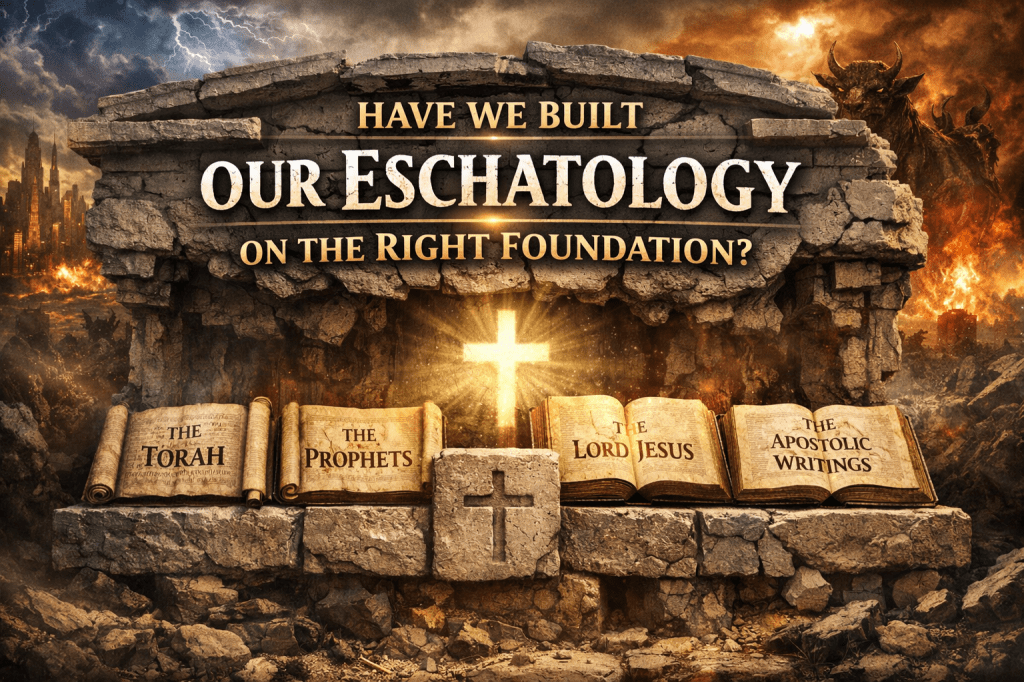
I affirm the restoration of all things. But here’s a question I think we need to wrestle with more seriously: How much of our eschatological framework still depends on the Book of Revelation?
Consider what the early church record actually shows:
Dionysius of Alexandria, Origen’s own student, conducted a detailed linguistic analysis and concluded Revelation could not have been written by the Apostle John. His influence shaped the Eastern churches’ skepticism for centuries.
Cyril of Jerusalem excluded Revelation from his canonical list entirely in his Catechetical Lectures (c. AD 348). His catechumens were instructed to read only the books he listed, and Revelation wasn’t among them.
The Council of Laodicea (AD 363–364) excluded Revelation from its canon, and this council represented churches in Asia Minor, the very region where the seven churches of Revelation were located.
The Syrian churches, geographically and linguistically closest to the apostolic world, didn’t accept Revelation until the sixth century. The Peshitta, the standard Syriac Bible, did not include it. To this day, the Syriac Orthodox Church and the Assyrian Church of the East use a lectionary drawn from only the twenty-two books of the Peshitta. Revelation is not among them.
Eusebius couldn’t even make up his mind; he placed Revelation tentatively among accepted books “if it seem right,” then alternatively among the spurious books. The most important church historian of the early centuries was unable to resolve the question.
Even the Reformers hesitated. Luther initially rejected Revelation as non-apostolic. Zwingli refused to use it for doctrine. Calvin, who wrote commentaries on nearly every book of the Bible, notably never wrote one on Revelation.
Here’s what strikes me: the “lake of fire,” the “second death,” the two resurrections separated by a thousand years, the binding and release of Satan, none of these concepts appear anywhere in the teaching of the Lord Jesus or the Apostles. They are unique to Revelation. And yet these are the very images that have defined the church’s doctrine of final punishment for centuries, including the doctrine of eternal torment that universalists rightly reject.
So here’s my question for the group:
If we reject eternal torment as inconsistent with God’s character and purpose, shouldn’t we also examine whether the source text most responsible for that doctrine belongs at the center of our eschatology in the first place?
The Apostles taught the Lord’s appearing, the universal resurrection, the judgment that follows, and “then comes the end” when God becomes “all in all” (John 5:28–29; 1 Corinthians 15:24–28), without ever appealing to Revelation. Christian eschatology is complete without it. The Torah, the Prophets, the Lord Jesus, and the Apostolic letters give us everything we need.
Curious where others land on this. Is Revelation still shaping your universalism? Or have you moved past it?
Next: Part 2 of 5: What If Revelation Is “Another Gospel”?
If you’re interested in reading the entire chapter from which this series originates, you can find it here: https://restorationtheologypress.com/table-of-contents/chapter-16/ .
 Restoration Theology Press