

If everyone is eventually restored, and I believe they are, then why does Scripture place such an urgent emphasis on faithfulness in this present age?
Here’s what I think many of us miss:
God is not simply saving everyone now. He is calling out a faithful first-fruits company of sons and daughters, conformed to the image of His faithful Firstborn Son (Romans 8:29), right now, in the midst of this present evil age for a glorious purpose (1 Peter 2:9).
The restoration of all things is real, God will one day be “all in all” (Acts 3:21; 1 Corinthians 15:28). But so is the calling. So is the prize. Scripture speaks not only of salvation as a free gift, the forgiveness of sins, the begetting of the spirit, and the indwelling of the Holy Spirit freely given (Acts 2:38; Ephesians 2:8–9; 1 Corinthians 6:11), but of the prize of the inheritance: the resurrection of life, celestial glory, and participation in the Royal Priesthood at the Heavenly Jerusalem (Philippians 3:13–14; Colossians 3:23–24; Hebrews 10:35–36). The gift is what God does for us and in us in this present age that qualifies us for the inheritance (Colossians 1:12). The prize is what the faithful receive at His appearing in the Age to Come based on our response to God’s transforming work of grace. And between the two stands the salvation of the soul, the present work of the Spirit transforming us from within, which determines whether we enter the resurrection of life or arrive at restoration by the far harder road of the resurrection of judgment (Matthew 16:25–26; 1 Peter 1:9; James 1:21).
There is a distinction between those who respond to the Spirit of grace with faithful obedience and those who presume upon mercy while bearing no fruit (John 15:1-6; 2 Corinthians 6:1). The Lord Jesus Himself warned that of the many who are called, only a few are chosen (Matthew 22:14), and Paul pressed forward toward the goal precisely because he knew the prize was not automatic (1 Corinthians 9:24–27).
Universal restoration is not the whole story. It’s the end of the story. But between now and then, there is a calling that demands everything, and how we live and respond to the Spirit of grace in this age determines whether we stand among that first-fruits company or arrive at restoration only after passing through the fires of divine correction (1 Corinthians 3:13–15).
Grace is not permission to coast. It’s power to be transformed (2 Corinthians 12:9; Titus 2:11–12). The Spirit of grace is working in us “both to will and to do for His good pleasure” (Philippians 2:13), but we must work out our salvation with fear and trembling (Philippians 2:12).
If your universalism has no urgency, no calling, no cost, you may have the destination right but the journey all wrong.
Continue the Series:
Part 1 of 4 – What If You Have the Destination Right but the Journey All Wrong?
Part 2 of 4 – One Stream of Grace, So Why Does Faithfulness Matter?
Part 3 of 4 – The Pattern Scripture Keeps Repeating That Most People Miss
Part 4 of 4 – The Parable Most Universalists Think They Understand
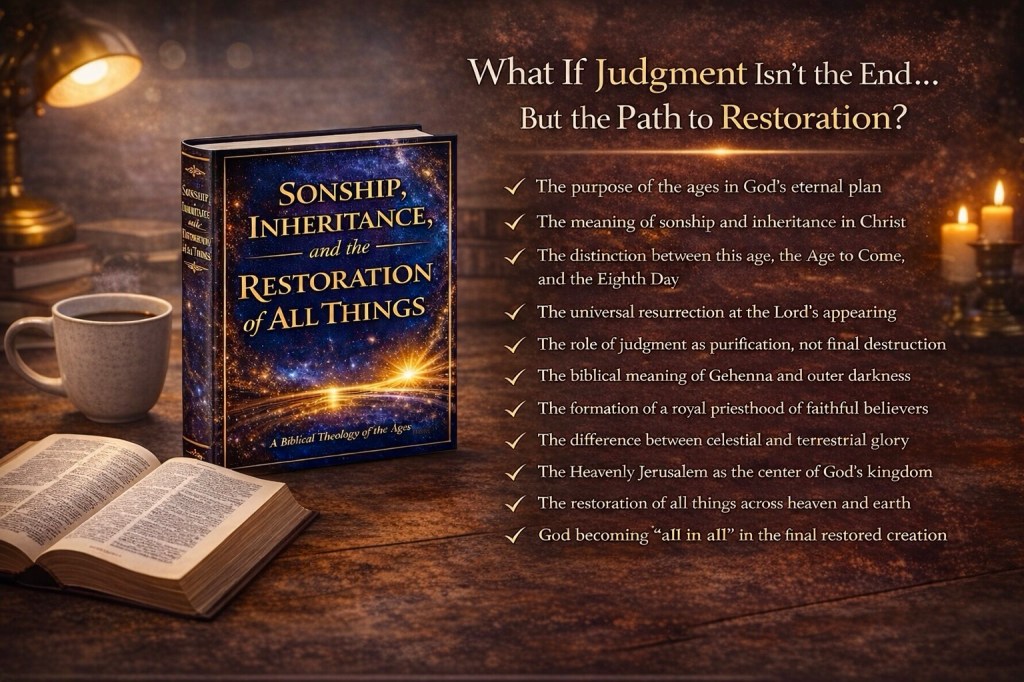
If you’re interested in reading the book: Sonship, Inheritance, and the Restoration of All Things from which this series originates, you can find it here: https://restorationtheologypress.com.
 Restoration Theology Press