
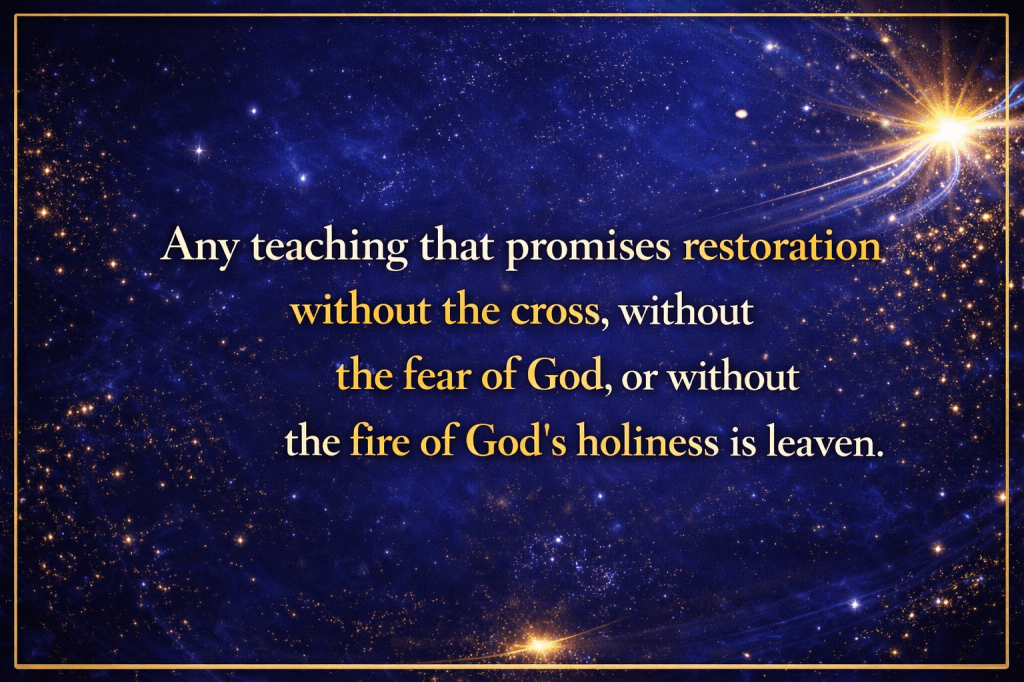
The universalism most Christians reject, and rightly so, is a sentimental universalism that denies the seriousness of judgment, softens the cross into a symbol, and teaches that all paths lead to God regardless of repentance, faith, or holiness. It promises restoration while skipping the fire. Scripture calls that kind of teaching leaven.
Biblical Universalism is something entirely different. It insists on a universal resurrection in which the dead are raised, some to the resurrection of life, others to the resurrection of judgment (John 5:28–29). It affirms that the fires of Gehenna in the Age to Come are real, severe, and proportioned to the light each person received and refused. It teaches that the Adamic soul is truly destroyed under the holy fire of God (Matthew 10:28), that body and soul perish, and that the spirit returns to God who gave it (Ecclesiastes 12:7). It holds that unfaithful believers forfeit the firstborn inheritance and endure corrective discipline, many stripes or few (Luke 12:47–48), while the ungodly face the full weight of divine wrath in the Age to Come (Romans 2:8-9).
But it also holds, because the Scriptures hold, that these judgments are age-lasting, not endless; purposeful, not pointless; and ordered toward a final resurrection “of the end” in which the purified are raised to immortal life in the new creation. The last enemy destroyed is death itself, and God becomes all in all (1 Corinthians 15:24–28).
Biblical Universalism does not pit the justice of God against His mercy. It confesses that both are accomplished, in order, through the ages He created for that very purpose.
QUESTION: How would you explain the role of judgment in God’s plan to someone hearing this for the first time?
I would say it this way: Judgment is not the opposite of restoration. It is the path to restoration.
Most people have been taught that God’s judgment is either endless punishment with no purpose or instant annihilation with no future. Biblical Universalism teaches a third option, the one the Scriptures actually present. God’s judgments are real, fearful, and searching. But they exist within a purpose that moves through them, not one that stops at them.
Think of it this way. The Father disciplines His sons in this present age, through trials, through the conviction of the Spirit, through the daily call to deny self and follow Christ. Those who submit to that refining are spared the harsher judgment of the Age to Come. They rise in the resurrection of life and enter the joy of the Lord. But those who resist grace in this age, that conforms us to the image of the Son, come under a severer fire in the next, not because God has abandoned them, but because the correction they refused in the gentler form must now come in the harder one.
For the unfaithful believer, that fire is corrective discipline within the household. For the ungodly, it is retributive wrath, real indignation, tribulation, and anguish on every soul that practiced evil (Romans 2:8–9). Yet even wrath is not God’s last word. When judgment has accomplished its purpose, the destruction of the Adamic corruption, the humbling of every knee, the purification of every spirit, then comes the resurrection “of the end,” the Eighth Day, and the new creation in which God is all in all. Judgment is the furnace. Restoration is what comes out of the furnace. You cannot have one without the other.
QUESTION: What Scripture or Scriptures anchor this belief for you personally?
Several, but if I had to name the ones that hold this whole understanding together:
“For as in Adam all die, even so in Christ all shall be made alive. But each one in his own order.” (1 Corinthians 15:22–23). The “all” on both sides of that verse is the same “all.” But “each in his own order”, the Greek word is tagma (τάγμα), a military term for a ranked division, tells us that restoration has structure, sequence, and timing. Not everyone arrives at the same time or by the same way.
“That in the dispensation of the fullness of the times He might gather together in one all things in Christ, both which are in heaven and which are on earth, in Him.” (Ephesians 1:10). The Father’s stated purpose is to sum up all things, heavenly and earthly, under the headship of Christ. Not some things. All things.
“For it pleased the Father that in Him all the fullness should dwell, and by Him to reconcile all things to Himself, by Him, whether things on earth or things in heaven, having made peace through the blood of His cross.” (Colossians 1:19–20). Reconciliation is through the blood of the cross, not apart from it. And its scope is all things, whether on earth or in heaven.
“Whom heaven must receive until the times of restoration of all things, which God has spoken by the mouth of all His holy prophets since the world began.” (Acts 3:21). Peter says this is not a new idea. The restoration of all things has been spoken by every holy prophet since the world began. It is the destination of history.
And underneath all of them: “Then comes the end, when He delivers the kingdom to God the Father, when He puts an end to all rule and all authority and power… The last enemy that will be destroyed is death… that God may be all in all.” (1 Corinthians 15:24–26, 28). Death is destroyed. Every enemy is subjected. God, is all in all. That is where the ages are headed.
QUESTION: How has this understanding changed the way you read the Bible, pray, or walk with the Lord?
It changed everything, and not in the way most people expect. When I first encountered this understanding, I assumed it would make the Christian life feel less urgent. If God restores all things in the end, why press on? Why deny yourself? Why fear the Lord?
The opposite happened. Understanding the ages made the Lord Jesus’ warnings more urgent, not less. When He says “strive to enter through the narrow gate” (Luke 13:24), I now understand that He is not threatening His disciples with an endless hell; He is warning them that the resurrection of life and the firstborn inheritance are at stake in how they live now. The unfaithful do not cease to belong to the household, but they forfeit the joy of the Lord and enter the fires of Gehenna. That is not a soft consequence. That is the difference between reigning with Christ in the Heavenly Jerusalem and enduring the corrective fire of the Age to Come.
It changed how I read Paul. When he says he presses toward the goal for “the prize of the upward call of God in Christ Jesus” (Philippians 3:14), I no longer flatten that into a generic encouragement. The prize is real. The upward call is real. The possibility of not attaining it is real. Paul himself said he disciplined his body lest, after preaching to others, he himself should be disqualified (1 Corinthians 9:27). That word, disqualified, carries weight when you understand the ages.
And it deepened the fear of the Lord in my own life. Not a servile terror, but the sober awareness that this present age is the quarry in which the Father is forming sons and daughters for the Age to Come. The life I live now, the hidden acts of obedience or compromise, the works done in the power of grace or refused in the name of convenience, all of it is being weighed in view of the Age to Come. The question is not whether God will restore all things. He will. The question is whether I will be found among the faithful at His appearing. That question is answered now.
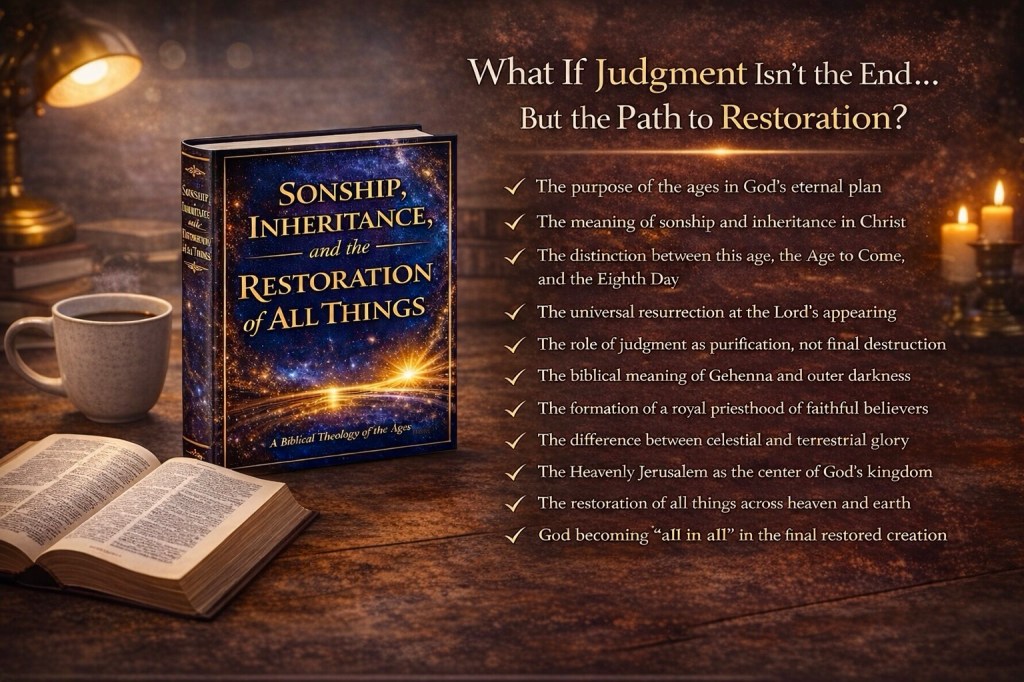
If you’re interested in the Biblical Universalism described in this post, the book “Sonship, Inheritance, and the Restoration of All Things” lays it out step by step.
You can read it here: https://restorationtheologypress.com.
 Restoration Theology Press