
Updated 6/27/2026
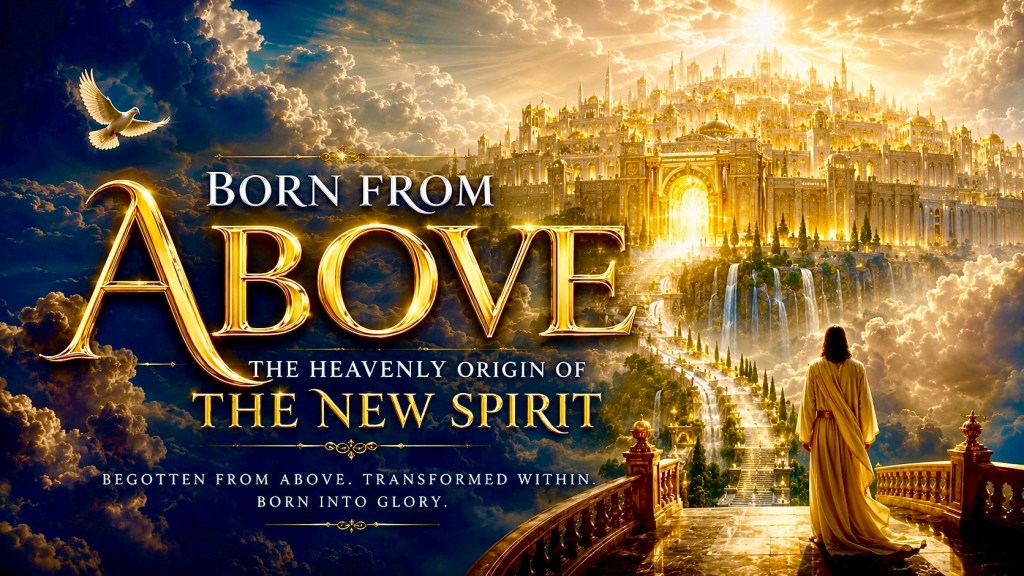
Introduction: The Question No One Asks About Being “Born Again”
Every Christian knows the phrase “born again.” It is among the most familiar words in the New Testament, repeated in sermons, printed on bumper stickers, and woven into the language of evangelism across every denomination. But familiarity has bred a kind of theological numbness. Most believers, if asked what actually happens when a person is “born again,” would offer some version of “God forgives my sins and I start a new life.” And while that answer is not wrong, it barely scratches the surface of what the Apostles actually teach. What is more, the English phrase “born again” may itself obscure the very truth it is meant to convey—because what happens at conversion is not the birth. It is the begetting. The conception. The planting of the incorruptible seed. The full birth awaits the resurrection.
The Greek word gennao (γεννάω)—the verb the Lord Jesus uses in John 3—carries both meanings: “to beget” (the father’s role, the act of conception) and “to give birth” (the mother’s role, the act of delivery). English forces a choice that the Greek does not. The older rendering “born again” did not err in the word “born”—that word rightly belongs to John 3, where the Lord sets birth of the flesh and birth of the Spirit side by side. It erred in two other ways: it read anōthen as “again,” a mere repetition of the first birth, rather than “from above”; and it collapsed the whole generative sequence into a single completed event at conversion. The faithful rendering is “born from above.” When we read the Lord Jesus’ words in the light of the full Apostolic witness, what happens at conversion is the divine begetting—the Father, through the Holy Spirit, planting the incorruptible seed in the believer’s spirit. The present age is the gestation—the period in which the divine seed is transforming the spirit from glory to glory, while the flesh is being put to death and the soul purified. And the full birth—the emergence of the sons and daughters of God from the womb of this creation into the glory of the new creation—happens at the resurrection.
The question this teaching sets out to answer is extremely simple: what is the origin of the seed that begins this transformation? Is the work of regeneration merely the old human spirit restored, repaired, or re-energized? Or does something enter the believer from somewhere else entirely—something whose origin is not of this earth, not of Adam, not of the dust? The Apostolic witness, when traced carefully from the Lord Jesus’ own words through the epistles, gives an answer that should take the breath away from anyone who has ears to hear: the seed that transforms the believer’s spirit is from above. Its origin is heavenly. It belongs to the order of the heavenly Man, not the order of the man of dust. And this truth, once grasped, transforms everything the believer understands about identity, destiny, and the urgent work of this present age.
Born from Above—The Lord Jesus’ Own Words
The foundational text is the Lord Jesus’ encounter with Nicodemus in John 3. Nicodemus comes to the Lord by night—a ruler of the Jews, a teacher of Israel, a man steeped in the Scriptures—and the Lord Jesus cuts through every preliminary with a single declaration: “Most assuredly, I say to you, unless one is born again, he cannot see the kingdom of God” (John 3:3).
The English phrase “born again” has become so domesticated that its original force is almost completely lost. The Greek word translated “again” is anōthen (ἄνωθεν), and it does not primarily mean “again” in the sense of repetition. Its primary meaning is “from above.” It is the same word used in John 3:31—“He who comes from above (anōthen) is above all”—and in John 19:11—“You could have no power at all against Me unless it had been given you from above (anōthen).” In every other Johannine usage, the word means “from above,” and there is no reason to strip it of that meaning in John 3:3. And the verb gennēthē (γεννηθῇ) is the passive of gennaō (γεννάω), whose plain sense is “to be born”; joined to anōthen it yields “born from above.” The verb spans the whole generative arc—conception through delivery—and only the context fixes which end is in view. The Lord Jesus is not telling Nicodemus that he must be born “a second time,” as though the first birth simply needs to be repeated. He is telling him that he must be born from above—begotten now from a different source, a different origin, a different realm than the one that produced his first birth**, and brought forth at the last into that heavenly realm. The conception belongs to this present age; the delivery awaits the resurrection.**
Nicodemus misunderstands this completely. The word anōthen holds both senses at once—“from above” and “again, anew”—and Nicodemus, reasoning on the natural plane, seizes the lower one. He hears “again”—a second physical birth—and asks the absurd question: “How can a man be born when he is old? Can he enter a second time into his mother’s womb and be born?” (John 3:4). His own reply betrays which sense he took: “a second time” is the language of repetition, and the only repeat birth he can imagine is the impossible return to the womb. Had he heard “from above,” he would never have reached for the womb at all. The Lord Jesus corrects him with a statement that draws an absolute line between two orders of existence: “That which is born of the flesh is flesh, and that which is born of the Spirit is spirit” (John 3:6).
Notice that the Lord speaks of birth on both sides of the line. “Born of the flesh” names a birth already accomplished—every man has been delivered from the womb into the flesh-order. By setting “born of the Spirit” in exact parallel, the Lord holds the same register: what is in view is a birth, of two orders, not a begetting set against a birth. This parallel is itself the warrant for hearing anōthen as “from above” and gennaō as “born.” This is not a relative statement. It is not “that which is born of the flesh is mostly flesh” or “that which is born of the Spirit is somewhat spiritual.” It is absolute. What is born of the flesh belongs to the flesh-order—earthly, Adamic, of the dust. What is born of the Spirit belongs to the Spirit-order—heavenly, divine in origin, belonging to a different realm. The two orders do not overlap. They do not blend. The flesh does not gradually become spirit through its own effort. What is needed is a seed from a different source altogether—a heavenly seed planted into the human spirit, transforming it from within into something it could never become on its own.
The Lord then adds the image of the wind: “The wind blows where it wishes, and you hear the sound of it, but cannot tell where it comes from and where it goes. So is everyone who is born of the Spirit” (John 3:8). The one who is born of the Spirit has received something whose origin cannot be traced by earthly means. You can see the effects—the sound of the wind—but the source is hidden, heavenly, beyond the reach of natural investigation. The divine begetting does not come from below. It comes from above. And the one who receives it carries within his spirit a seed whose origin is not of this world—a seed that has begun a transformation that will not be complete until the resurrection.
Incorruptible Seed from a Heavenly Source
If the Lord Jesus establishes the heavenly origin of the divine begetting, the Apostles confirm and develop it with remarkable precision.
Peter writes, “Having been born again, not of corruptible seed but incorruptible, through the word of God which lives and abides forever” (1 Peter 1:23). The verb here is anagegennēmenoi (ἀναγεγεννημένοι)—“having been begotten again.” And the contrast is between two kinds of seed—spora (σπορά), the origin from which life springs. The first begetting comes from “corruptible seed”—phthartēs sporas (φθαρτῆς σπορᾶς)—seed that is subject to decay, mortality, and death. This is the Adamic seed, the biological inheritance passed from Adam through every generation, carrying within it the sentence of death. The second begetting comes from “incorruptible seed”—aphthartou (ἀφθάρτου)—seed that does not decay, does not deteriorate, does not die. This seed is not a purified version of the Adamic seed. It is a different seed altogether, from a different source entirely, and when planted in the believer’s spirit it begins producing a different kind of life—heavenly life, growing from within, transforming the spirit that receives it.
John makes the source of this seed explicit: “Whoever has been born of God does not sin, for His seed remains in him; and he cannot sin, because he has been begotten of God” (1 John 3:9 literal). The verb is gegennēmenos (γεγεννημένος)—“the one having been begotten of God.” The word “seed” here is sperma (σπέρμα)—and the possessive is decisive: His seed. God’s own seed. What has been implanted in the believer at the divine begetting is not a renovated human faculty but God’s own sperma—the divine life-principle deposited within the human spirit, producing a nature that cannot sin because it originates in God Himself. The seed is not from Adam. It is from God. And because it is from God, it shares the incorruptible character of its Source. The spirit that receives this seed begins to be transformed by it—changed from within, from the earthly nature of the old creation into the heavenly nature of the new creation.
John 1:12–13 removes every possible ambiguity about the origin of this begetting: “But as many as received Him, to them He gave the right to become children of God, to those who believe in His name: who were born, not of blood, nor of the will of the flesh, nor of the will of man, but of God.” Three earthly origins are explicitly denied. Not of blood—not from natural descent, not from the genetic line of Abraham or any other patriarch. Not of the will of the flesh—not from human desire, not from biological impulse. Not of the will of man—not from human decision, not from the choice of a father or a mother. The begetting is “of God”—ek Theou (ἐκ Θεοῦ). Its origin is divine. It comes from God alone, initiated by God alone, accomplished by God alone. The believer did not generate this begetting. He received it. And what he received was not an upgrade of his old nature but a divine seed planted in his spirit—the beginning of a transformation that will, if brought to maturity by the word of God and the Holy Spirit through the putting to death of the flesh and the purification of the soul, produce its full fruit at the resurrection. For the word plants the seed and nourishes the growth—“as newborn babes, desire the pure milk of the word, that you may grow thereby” (1 Peter 2:2)—and the Holy Spirit is the living agent who applies the work, putting to death the deeds of the body (Romans 8:13) and purifying the soul through obedience to the truth (1 Peter 1:22).
The Spirit as the Soil—The Ground That Receives the Seed
Before tracing the prophetic promise and the Apostolic development further, we must understand what happens when this heavenly seed is planted—and where it is planted.
In the parable of the sower, the Lord Jesus identifies the soil as the heart—kardia (καρδία): “what was sown in his heart” (Matthew 13:19). The heart in Scripture is the unified inner man—the soul and spirit as one entity with two distinguishable dimensions. The spirit is the God-ward dimension of the heart, the deepest personal ground where the conscience witnesses and where the person lives in the most essential sense. The soul is the outward-facing, expressive dimension—the aspect of the heart that connects to the body and the realm the person inhabits. And the seed must reach the deepest ground to take root. The heart is the field, but the spirit is the deepest soil—the ground where the incorruptible seed must take root.
This is confirmed by Ezekiel 36:26, where the “heart of stone” that God replaces with a “heart of flesh” maps onto the whole interior hardened by what Paul calls the flesh—the self-governing orientation established at the fall. The path soil in the parable is the extreme expression of this—the spirit completely suppressed beneath the flesh’s dominance, the conscience seared, the ground so hardened that the seed never penetrates. The rocky ground is the spirit that receives the seed with initial joy but has no depth; when tribulation comes, the seed withers because the spirit was shallow. The thorny ground is the spirit that receives the seed and the begetting occurs, but the flesh—operating through the soul—produces competing growth that chokes the developing new spirit. Mark 4:19 identifies the thorns: “the cares of this world, the deceitfulness of riches, and the desires for other things”—expressions of the flesh’s self-governance operating through the soul. The good ground is the spirit that is open, receptive, and prepared through the work of the Spirit and the word. The seed takes root. The transformation begins. And the fruit comes—a hundredfold, sixty, thirty.
The old spirit—formed by God from the breath of life—the Hebrew neshāmâh (נְשָׁמָה), the breath God breathed into man’s nostrils at his formation, by which man became a living soul (Genesis 2:7 literal)—of the first creation order—is not destroyed or discarded at the divine begetting. It is the fertile field in which the heavenly seed is planted and from which the new creation grows. What the seed then works in the spirit is best seen as a metamorphosis: the old spirit itself is transformed—the same creature carried into a new order of existence, as a caterpillar becomes a butterfly. It is not replaced by a foreign spirit, nor taken up and consumed into a third thing; it is itself changed from within, from the earthly nature into the heavenly nature, from glory to glory, by the power of the incorruptible seed working in it. The images of seed, soil, conception, and metamorphosis are illustrations held lightly: pressed too far, each misleads—the gamete picture toward replacement, the soil toward mere hosting—so they serve the eye, not the argument. What results is not the substitution of something foreign for the old, but the progressive transformation of the same spirit, made new in nature.
The Promise Fulfilled: A New Spirit and My Spirit
The divine begetting that the Lord Jesus announced and the Apostles described was not without precedent in the Scriptures. The prophets had foretold it centuries before it was accomplished.
Ezekiel records the Lord’s promise to the house of Israel: “I will give you a new heart and put a new spirit within you; I will take the heart of stone out of your flesh and give you a heart of flesh. I will put My Spirit within you and cause you to walk in My statutes, and you will keep My judgments and do them” (Ezekiel 36:26–27).
In this prophecy, the elements must be carefully distinguished. “I will take the heart of stone out of your flesh”—the flesh’s hardening removed, the self-governing orientation that has calcified the inner man since the fall being broken apart and taken away. This is the appropriation of the crucifixion of the old man accomplished in Christ that the Apostles later describe. “I will give you a heart of flesh”—Ezekiel’s contrast is between stone and living tissue: what was hard, dead, and unresponsive is made soft, alive, and responsive. This is the soul purified—freed from the flesh’s hardening, made tender and responsive to the Spirit. Ezekiel’s “flesh” here is used in its creational sense—the softness of living tissue as opposed to the deadness of stone—not in Paul’s theological sense of the corrupted self-governance. The soul, freed from the old hardness, becomes responsive to the Spirit’s touch. “I will put a new spirit within you”—the spirit transformed by the divine seed. Not a foreign spirit replacing the old one, but the old spirit, now receiving God’s own seed, being made new from within—changed progressively into the heavenly order. And “I will put My Spirit within you”—God’s own Holy Spirit placed within the believer, the indwelling presence that sustains, empowers, and fills the transforming spirit with divine life.
Two realities are promised, and they must not be collapsed into one. The “new spirit” is the believer’s own spirit being transformed by the incorruptible seed—changed from a spirit of the first creation order into a spirit of the heavenly order. “My Spirit” is God’s own Holy Spirit, placed within to indwell, to sustain, and to govern what the flesh once governed. The transforming spirit is the vessel; the Holy Spirit is the life that fills it. And the result—“cause you to walk in My statutes”—is the governance transferred. The soul that was governed by the flesh now yields to the transforming spirit in union with the Holy Spirit.
Paul confirms this distinction in Romans 8:16: “The Spirit Himself bears witness with our spirit that we are children of God.” Two witnesses are named—God’s Spirit and our spirit—bearing testimony together. If they were the same spirit, there could be no “with.” The Holy Spirit and the believer’s transforming spirit are distinguishable, just as Ezekiel’s prophecy distinguishes them. Yet they are not separable. For Paul also writes, “He who is joined to the Lord is one spirit with Him” (1 Corinthians 6:17). The believer’s spirit, receiving the divine seed and being transformed from within, is joined to the Lord—and the two become “one spirit,” not by the human spirit being absorbed into the unbegotten divine essence, but by the Holy Spirit’s life flowing into and through the transforming spirit, the way the sap of a vine flows into and through a living branch.
And what is the nature of this transformation? Peter declares that believers have become “partakers of the divine nature, having escaped the corruption that is in the world through lust” (2 Peter 1:4). The Greek is koinōnoi theias phuseōs (κοινωνοὶ θείας φύσεως)—sharers, participants in the divine nature itself. The divine seed, planted in the believer’s spirit, progressively transforms the spirit so that it partakes of the divine nature—not metaphorically, not aspirationally, but actually. The child shares the nature of the father because the child was begotten from the father’s seed. The spirit being transformed by God’s seed grows into participation in the divine nature, from glory to glory, until at the resurrection the transformation is complete and the full image of the heavenly Man is revealed.
This does not mean the believer becomes God. The distinction is between the unbegotten and the begotten. God the Father is unbegotten—self-existent, uncreated, the eternal Source from whom all things come. The believer’s spirit is begotten—it has received God’s seed, it is being transformed into His order, it is growing into participation in His nature, but it is not self-existent and it is not the Source. It is a son, not the Father. It is begotten, not unbegotten. Just as a child born of earthly parents shares their nature without being them, so the spirit being transformed by God’s seed grows into the divine nature without becoming God in essence. The creature remains the creature and the Creator remains the Creator—but the creature begotten of the Creator is being transformed into the Creator’s order, the Creator’s kind, the Creator’s likeness. This is why the Lord Jesus says the faithful in the resurrection will be “equal to the angels” (Luke 20:36)—isangeloi (ἰσάγγελοι)—of the same heavenly order. And this is why John declares, “We shall be like Him, for we shall see Him as He is” (1 John 3:2). Not like Him in the sense of being the unbegotten God. Like Him in the sense of bearing His nature, sharing His glory, belonging to His order—sons and daughters who bear the Father’s likeness because their spirits were transformed by His seed until the full image of the Firstborn was formed within them.
The Order of the Heavenly Man
Paul’s argument in 1 Corinthians 15 provides the theological framework for understanding what the divine seed is producing within the believer’s spirit. In one of the most sweeping passages in the Apostolic witness, Paul traces the line from Adam to the Lord Jesus and establishes two orders of humanity—two kinds of human beings, originating from two different sources.
“And so it is written, ‘The first man Adam became a living being.’ The last Adam became a life-giving spirit” (1 Corinthians 15:45). The contrast is total. The first Adam became a psuchē zōsa (ψυχὴ ζῶσα)—a living soul, a creature that received life but could not impart it. The last Adam became a pneuma zōopoioun (πνεῦμα ζωοποιοῦν)—a life-giving spirit, a being who not only possesses life but communicates it to others. The first Adam was a recipient. The last Adam is a source. The first Adam received breath and lived. The last Adam breathes life into the dead and they rise.
Paul then draws the line between the two orders: “The first man was of the earth, made of dust; the second Man is the Lord from heaven. As was the man of dust, so also are those who are made of dust; and as is the heavenly Man, so also are those who are heavenly” (1 Corinthians 15:47–48). Two men. Two origins. Two orders. The first man is choïkos (χοϊκός)—of the dust, of the earth-order. Those who belong to him are of the same order: dusty, earthly, mortal. The second Man is ex ouranou (ἐξ οὐρανοῦ)—from heaven, of the heavenly order. And those who belong to Him are of the same order: heavenly.
This is the order into which the divine seed is transforming the believer’s spirit. The seed comes from the heavenly Man. It carries the heavenly divine nature within it. And as it grows in the soil of the old spirit, it progressively transforms that spirit from the earthly nature, Adamic, of the dust—into the heavenly nature of the second Man. The believer is not waiting to begin becoming heavenly. The transformation has already begun, because the heavenly seed has already been planted. But neither is the transformation already complete. The spirit is being changed from glory to glory—from the initial glory of the washed and prepared spirit at conversion to the final glory of the fully transformed celestial spirit at the resurrection.
The Lord Jesus Himself confirmed this present reality in His prayer to the Father on the night before His death: “I have given them Your word; and the world has hated them because they are not of the world, just as I am not of the world” (John 17:14). “Just as I am not of the world”—the same origin, the same order, the same heavenly seed producing the same heavenly nature. The Lord Jesus does not say His own are slightly less worldly than the world. He says they are not of the world at all, in the same way that He is not of the world. The seed that is transforming them is from the same Source. The order into which they are being changed is His order. The destination of their transformation is conformity to His image. They are citizens of a heavenly commonwealth even while the transformation is still underway—because what defines them is not the degree of transformation already accomplished but the origin and nature of the seed that has been planted within them.
And Paul concludes with the promise that completes the picture: “And as we have borne the image of the man of dust, we shall also bear the image of the heavenly Man” (1 Corinthians 15:49). The full bearing of the heavenly Man’s image will occur at the resurrection—the full birth—when the body is transformed to match what the spirit is becoming. But the bearing of that image has already begun—in the spirit, receiving the heavenly seed, being transformed from within, growing toward the maturity of the One from heaven.
Children of the Jerusalem Above
Paul’s allegory in Galatians 4 adds a dimension to the divine begetting that most readers overlook entirely. In contrasting the two covenants through the figures of Hagar and Sarah, Paul establishes not only two kinds of covenant but two kinds of origin—two mothers, two begettings, two cities.
“For it is written that Abraham had two sons: the one by a bondwoman, the other by a freewoman. But he who was of the bondwoman was born according to the flesh, and he of the freewoman through promise” (Galatians 4:22–23). Ishmael was begotten “according to the flesh”—by natural means, by human effort, by the Adamic capacity to reproduce. Isaac was begotten “through promise”—by divine intervention, by the power of God overcoming the deadness of Sarah’s womb, by a creative act that defied natural possibility.
Paul then identifies the two mothers with two cities: “For these are the two covenants: the one from Mount Sinai which gives birth to bondage, which is Hagar… but the Jerusalem above is free, which is the mother of us all” (Galatians 4:24, 26). Hagar corresponds to the earthly Jerusalem—the flesh-order, the Adamic origin, bondage under the law. Sarah corresponds to the Jerusalem above—the heavenly origin, the Spirit-order, the freedom of the children of promise.
And then Paul says of believers: “the Jerusalem above is free, which is the mother of us all.” If the Jerusalem above is our mother, and God the Father is the One who begets, then the begetting-and-birth framework is complete. The Father plants the heavenly seed through the Holy Spirit—that is the begetting, the conception, the moment of regeneration. The Jerusalem above is the mother—and the full birth, the delivery, will occur at the resurrection, when the sons of God emerge from the womb of this creation into the heavenly city that is their true home. Our spiritual origin at regeneration is not earthly. It is not of this present Jerusalem, not of this present age, not of the Adamic order. The seed that has been planted in us is from above—from the same heavenly city that Hebrews describes as the destination of the faithful: “But you have come to Mount Zion and to the city of the living God, the heavenly Jerusalem, to an innumerable company of angels, to the general assembly and church of the firstborn who are registered in heaven, to God the Judge of all, to the spirits of just men made perfect” (Hebrews 12:22–23).
Notice what Hebrews calls the faithful who have arrived at this city: “the spirits of just men made perfect.” They are persons—real, individual, conscious—existing as spirits in the heavenly Jerusalem. Their identity is spiritual. Their home is the city above. The spirit is the enduring core of personal identity—the person in the essential sense. And Paul says this city is our mother—the origin from which the heavenly seed comes and into which the faithful will be fully born at the resurrection.
This is why Paul can write to the Philippians with such confidence: “For our citizenship is in heaven, from which we also eagerly wait for the Savior, the Lord Jesus Christ” (Philippians 3:20). The word “citizenship” is politeuma (πολίτευμα)—the commonwealth, the civic identity, the place where one truly belongs. The believer’s true civic identity is not earthly. It is heavenly. And it is not merely a future destination but a present reality grounded in the origin of the seed—because the seed that was planted in the believer’s spirit came from above, carries the heavenly order within it, and is transforming the spirit into the heavenly order to which that city belongs. The body remains on earth; the citizenship is in heaven. The tension between these two realities is the very thing that gives the present age its urgency and its purpose.
The Vine and the Branches—How Heavenly Life Is Sustained
If the divine seed has been planted in the believer’s spirit and the transformation has begun, the question immediately arises: how is this heavenly life sustained in an earthly vessel? The Lord Jesus answers this directly in John 15 through the image of the vine and the branches.
“I am the true vine, and My Father is the vinedresser. Every branch in Me that does not bear fruit He takes away; and every branch that bears fruit He prunes, that it may bear more fruit… Abide in Me, and I in you. As the branch cannot bear fruit of itself, unless it abides in the vine, neither can you, unless you abide in Me. I am the vine, you are the branches. He who abides in Me, and I in him, bears much fruit; for without Me you can do nothing” (John 15:1–2, 4–5).
A branch is genuinely distinct from the vine—it has its own form, its own leaves, its own individual expression. But the branch has no independent life source. It does not generate its own sap. The life that flows through the branch is the life of the vine, communicated through the organic connection between them. Cut the branch from the vine and it withers—not because it loses some external support, but because the life it was living was never its own in the first place. It was participated life. Shared life. The vine’s life flowing through the branch’s unique, individual form.
This is the picture of the believer’s relationship to the Lord Jesus at the level of the spirit. The spirit—receiving the divine seed, being transformed from within—is genuinely distinct. It is a real, individual human spirit, not a fragment of the divine absorbed into the creature. But the life that sustains the seed’s growth is not independently generated. It is the life of the risen Lord Jesus, communicated by the Holy Spirit through the organic union established at regeneration. The Holy Spirit is the living agent who communicates the life of the risen Lord Jesus to the branches—the way sap carries the vine’s life into every limb, so the Spirit carries the Lord’s life into every member. Just as the tree of life in the garden was the ongoing sustenance that Adam’s mortal frame required, so the Holy Spirit is the tree of life restored to the believer—the continuous provision of heavenly life in an earthly vessel.
This is what Paul means when he says, “He who is joined to the Lord is one spirit with Him” (1 Corinthians 6:17). The human spirit and the Holy Spirit are distinguishable—the branch is not the vine trunk—but they are functionally one, because the life that sustains the transformation of the human spirit is the Lord’s own life communicated by His Spirit. They are “one spirit” the way the branch and the vine are one organism—genuinely distinct in identity, genuinely one in life.
And this is why the Lord Jesus could say to Saul on the Damascus road, “Saul, Saul, why are you persecuting Me?” (Acts 9:4). Not “My followers.” Not “My people.” Me. Because the union is so real, so organic, so vital, that what is done to the members is done to the Head. The vine feels what happens to the branches. The life flowing through them is His life. And Paul names this living organism with a word that should stop every reader in his tracks: “so also is Christ” (1 Corinthians 12:12). Not just “the church.” Not just “the body of Christ.” But Christ. The Head and the members together, animated by one life, bearing one name, constituting one living reality.
The Threefold Work—Flesh Put to Death, Soul Purified, Spirit Transformed
If the divine seed has been planted in the spirit and the Holy Spirit sustains its growth, then the work of this present age is not a single, undifferentiated process but a threefold movement—and understanding this movement is essential for grasping what the divine begetting sets in motion.
The first movement is reckoning the flesh crucified with Christ. The flesh is not the body, and it is not the soul. The flesh is the complete disposition of the soul exerting its rule of self—the self-governing orientation established at the fall when the serpent offered independence from God: “You will be like God” (Genesis 3:5). Under the rule of self, the soul causes the body to fulfill its passions and desires. The complete experience of this self-governance—in league with the fallen powers, expressed through the body, with stored memories and ingrained patterns—is what Paul calls “the flesh.” It is the source of the thorns in the parable of the sower, the competing growth that chokes the divine seed if it is not dealt with. The crucifixion of the flesh is not a death the believer performs but the one death already worked in Christ—“our old man was crucified with Him” (Romans 6:6)—reckoned as his own and applied progressively by the Spirit through the word. The believer does not re-crucify what was crucified in Him; the Spirit puts to death the deeds of the body in the walk—“If by the Spirit you put to death the deeds of the body, you will live” (Romans 8:13)—the outworking of the one crucifixion, not a second one. As that finished death is reckoned and the flesh’s dominion broken, the thorns are cleared and the spirit has room to grow.
The second movement is the purification of the soul. The soul is the expressive dimension of the heart—the outward-facing aspect that connects to the body and the realm the person inhabits. It was created good, but since the fall the flesh has corrupted its expression, bending the soul’s desires, affections, and will toward self rather than toward God. As the flesh is put to death, the soul is freed from its governance. The corrupted distortions are removed. Peter describes this work: “Since you have purified your souls in obeying the truth through the Spirit” (1 Peter 1:22). The soul is not destroyed. It is purified—the same soul, purified of the flesh’s corruption, increasingly free to express what the spirit within is becoming.
The third movement is the transformation of the spirit. This is where the divine seed does its deepest work. The old spirit—formed by God from the neshāmâh, of the first creation order—is being progressively transformed by the incorruptible seed into a spirit of the heavenly order. Paul describes this transformation in 2 Corinthians 3:18: “But we all, with unveiled face, beholding as in a mirror the glory of the Lord, are being transformed into the same image from glory to glory, just as by the Spirit of the Lord.” The word “transformed” is metamorphoumetha (μεταμορφούμεθα)—the same word used for the Lord Jesus’ transfiguration, where His inner glory broke through into visible form. It is present tense and passive voice: something is being done to us, progressively, by an agent outside ourselves—the Spirit of the Lord. And what is being transformed is the spirit—the deepest ground of the person, where the divine seed was planted—being changed from the initial glory of the washed and prepared spirit at conversion to the final glory of the fully transformed celestial spirit at the resurrection. This is resurrection applied progressively. The spirit is being raised, degree by degree, from the earthly nature into the heavenly nature of the second Man.
And because the soul reflects the condition of the spirit, the tabernacle pattern illuminates what is happening within the believer. In the tabernacle, the Most Holy Place—where the glory of God dwelt above the mercy seat—corresponds to the spirit. The Holy Place—where the lampstand burned, the showbread was set, and the altar of incense stood—corresponds to the soul. But between these two chambers hung the veil, and the veil blocked the glory of the Most Holy Place from shining into the Holy Place. The author of Hebrews identifies this veil explicitly: “having boldness to enter the Holiest by the blood of Jesus, by a new and living way which He consecrated for us, through the veil, that is, His flesh” (Hebrews 10:19–20). The veil is the flesh—the self-governing disposition established at the fall. Within the believer, the flesh functions as the veil between the spirit and the soul, obstructing the spirit’s communion with God from reaching and informing the soul’s expression.
At the cross, the Lord Jesus broke this veil open. In the Levitical sin offering, the offerer laid his hands on the head of the sacrifice and the sin was transferred—from the offerer to the offering. The offering bore what was not its own and was then consumed. Isaiah saw this fulfilled in the Servant: “The LORD has laid on Him the iniquity of us all” (Isaiah 53:6). Paul declares, “He made Him who knew no sin to be sin for us” (2 Corinthians 5:21)—the Greek hamartia (ἁμαρτία) translates the Hebrew chaṭṭāʾth (חַטָּאת), the word that means both “sin” and “sin offering.” The Lord Jesus became the sin offering. The sins—the works of the flesh—were laid upon Him as the offerer’s sins were laid on the head of the sacrifice, and He bore them away. But the flesh itself He did not receive by transfer; He assumed it—taking the common flesh of the race through Mary and bearing it as His own, yet never letting it govern. God, “sending His own Son in the likeness of sinful flesh, on account of sin, condemned sin in the flesh” (Romans 8:3). The phrase “on account of sin” is peri hamartias (περὶ ἁμαρτίας)—the standard Septuagint rendering of “as a sin offering.” He bore that flesh as His own and carried it into death, and the verdict fell upon sin—the root condemned in His body on the cross, subtractive and not retributive. What the Lord Jesus accomplished judicially and definitively at the cross, the faithful appropriate progressively by faith. As the flesh is put to death, the veil is removed from the heart: “Nevertheless when one turns to the Lord, the veil is taken away” (2 Corinthians 3:16). And then Paul describes the result: “But we all, with unveiled face, beholding as in a mirror the glory of the Lord, are being transformed into the same image from glory to glory, just as by the Spirit of the Lord” (2 Corinthians 3:18). With unveiled face—the veil of the flesh removed. Beholding the glory—the spirit’s communion with God, now unobstructed. Transformed from glory to glory—the spirit being changed by the divine seed as the glory flows unhindered from the deepest chamber through the soul.
The soul does not need a separate transformation mechanism. The soul is changed by the removal of the veil—the flesh put to death—and by what transforms the spirit—the divine seed, from glory to glory. As the veil is removed and the spirit grows brighter, the soul reflects the spirit’s growing light with increasing clarity. At the resurrection, the veil is completely gone. The flesh is fully removed. The spirit’s celestial glory, in perfect communion with the Holy Spirit, shines unhindered through the purified soul into the celestial body. The whole person is full of celestial light. The purification of the soul (the removal of the flesh’s governance) and the transformation of the spirit (by the divine seed) are not two independent processes. They are one work viewed from two angles. Remove the flesh’s distortion, and the soul reflects more clearly. Transform the spirit, and the soul reflects something brighter. Both happening simultaneously produce the progressive change the faithful experience in this present age.
This is what Paul calls “Christ being formed in you” (Galatians 4:19). And notice Paul’s language—he says he is “laboring in birth again until Christ is formed in you.” The forming of Christ is the divine seed transforming the spirit—the heavenly pattern being reproduced in the deepest ground of the believer’s person. Paul is laboring as a midwife over a pregnancy that has stalled. The Galatians were begotten of the Spirit, but the seed’s transforming work within them—the growth of the new man—was being choked by the flesh. If the seed does not bring the spirit to maturity, the full birth cannot occur. The divine seed, by the Holy Spirit, is forming the image of the heavenly Man in the believer’s spirit—His character displacing the flesh’s character, His governance replacing the flesh’s governance, His likeness taking shape where the old man once ruled. The seed supplies the heavenly pattern. The Holy Spirit is the agent. The spirit is the soil being transformed. And the soul reflects the change with increasing clarity as the flesh is put to death and the spirit grows brighter.
The pattern is the Lord Jesus in Gethsemane: “Not My will, but Yours, be done” (Luke 22:42). His soul genuinely desired otherwise—“if it is possible, let this cup pass from Me” (Matthew 26:39). But He surrendered His self-governance to the Father’s will. The soul was not abolished. It was submitted. The self-disposition was put to death. The soul continued to function—feeling, expressing, relating—but under the Father’s governance. Every act of “not my will but Yours” in the believer’s life is a repetition of Gethsemane—the flesh put to death, the soul submitted, the spirit yielded to the Father. “He must increase, but I must decrease” (John 3:30)—the “I” that decreases is not personhood itself but autonomous self-rule. The “He” that increases is Christ’s life, formed within the spirit through the divine seed—and reflected by the soul with increasing clarity.
The Mismatch—A Heavenly Seed in an Earthly Vessel
If the spirit is being transformed toward the heavenly order and the body is still earthly, then there is a mismatch at the heart of the believer’s present experience—and this mismatch explains everything about the urgency, the struggle, and the purpose of this present age.
Paul describes this tension in 2 Corinthians 5:2–4: “For in this we groan, earnestly desiring to be clothed with our habitation which is from heaven… For we who are in this tent groan, being burdened, not because we want to be unclothed, but further clothed, that mortality may be swallowed up by life.” The believer groans—not in despair but in anticipation—because the spirit is being transformed toward a heavenly order that the mortal, earthly body does not yet correspond to. The inner reality is moving toward the heavenly; the outer vessel is still of the dust. The believer longs not for death—not to be “unclothed”—but for the resurrection, when mortality is swallowed up by life and the body is transformed to match what the spirit is becoming.
The womb typology illuminates this mismatch. The heavenly seed has been planted—the spirit has begun to be transformed from above. But the seed is gestating in an earthly vessel. The present age is the period of foundational formation, when every essential structure is being laid down but nothing is yet mature. The child in the womb is alive but cannot survive outside the womb. The believer carries the heavenly seed but cannot yet enter the heavenly city in fullness. The gestation must run its course. The flesh must be put to death. The soul must be purified. The spirit must be brought to maturity by the seed’s transforming work. And only then can the full birth occur.
Why This Matters—The Salvation of the Soul and the Full Birth
If the divine seed is transforming the spirit and the soul reflects the spirit’s condition, then the salvation of the soul is the entire process by which the soul is liberated from the flesh’s governance and brought to its glorified expression. The flesh must be put to death—the self-governing orientation put to death by the Spirit through the word. The soul must be purified—freed from the distortions that the flesh imposed upon it. The spirit must be transformed—the divine seed brought from its initial planting to its full maturity. And at the resurrection, the whole person is glorified—the fully transformed celestial spirit meets the celestial body, and the purified soul reflects the fullness of the celestial spirit’s reality through the celestial body. The complete celestial person results. The whole person is full of celestial light: spirit transformed, soul purified and glorified, body celestial.
The Lord Jesus made this the hinge of discipleship: “For whoever desires to save his life will lose it, but whoever loses his life for My sake will find it” (Matthew 16:25). The word translated “life” is psuchē (ψυχή)—soul. To cling to the self-governed soul-life—to refuse the putting to death of the flesh, to insist on autonomous self-rule—is to lose the soul in the Age to Come. To surrender it for Christ’s sake—to let the flesh be put to death, to let the spirit’s growing heavenly life displace the old governance—is to find it. The same soul. Purified. Saved. The Greek is emphatic: “he will find it”—autēn (αὐτήν). The very soul that was surrendered is the soul that is recovered, not destroyed and replaced but purified and glorified in the resurrection.
Peter calls this “the end of your faith—the salvation of your souls” (1 Peter 1:9). The “end”—telos (τέλος)—is the goal, the intended destination, the purpose for which faith was given. Faith was not given merely to secure the forgiveness of past sins, as vital as that is. Faith was given so that the soul might be saved—so that the flesh might be put to death, the soul purified, the spirit transformed by the heavenly seed, and the whole person made ready for the Day when the full birth occurs.
And the Day is the day of birth. At the resurrection, the body is transformed to match what the spirit has become. “It is sown a natural body, it is raised a spiritual body” (1 Corinthians 15:44). The sōma psychikon (σῶμα ψυχικόν)—the body that made the person a “living soul,” named after the soul-dimension because the earthly body made that dimension dominant—is replaced by the sōma pneumatikon (σῶμα πνευματικόν)—a body that makes the person a spiritual being, named after the spirit-dimension because the celestial body makes that dimension dominant. Same heart. Same soul—purified and glorified. Same spirit—fully transformed. New body—celestial. The continuity of the person is complete. Isaiah foresaw this moment: “Before she was in labor, she gave birth; before her pain came, she delivered a male child… Shall the earth be made to give birth in one day? Or shall a nation be born at once?” (Isaiah 66:7–8). In one hour of resurrection, a holy nation is brought forth—the sons and daughters whom God has been forming in the hidden womb of this present age are openly born into the glory of the new creation (1 Peter 2:9). The begetting happened at conversion. The gestation is this present age. The birth is the resurrection.
The full image of the heavenly Man is complete—spirit, soul, and body—and the believer enters the glory for which the heavenly seed was planted in the first place.
But if the flesh was not put to death—if the self-governing soul-life remained enthroned, if the thorns choked the seed, if the spirit’s transformation stalled—then the body cannot be raised celestial, because the inner reality does not correspond to the heavenly order. The seed was planted, but the full birth did not occur at the Lord’s appearing at the resurrection of life. Such believers are not left in their graves to await a later rising. At that same hour, when all who are in the graves hear His voice and come forth (John 5:28–29), they too are raised—but in mortal bodies, for the body at the resurrection corresponds to the nature of the spirit, and their spirit remained of the earthly order. As the womb typology reveals, those whose formation is incomplete at the end of this age are not abandoned—their purifying extends through the Seventh Day, the age of corrective judgment, where the fire performs the subtractive work they refused when the Spirit of grace offered it in this present age. The fire removes the flesh involuntarily and purifies the soul and the spirit—but the fire does not transform, for transformation belongs to the divine seed working through the word and the Spirit, and that work was choked in this present age when it was offered. The spirit remains of the earthly order, and this is precisely why their restoration is terrestrial rather than celestial. The mortal body in which they were raised dies under Gehenna’s judgment, and their delivery comes at the resurrection “of the end” (1 Corinthians 15:24)—the restoration of their bodily existence, raised this time into terrestrial immortal bodies on the renewed earth. This later raising does not divide the one hour the Lord declared—every grave of this present age was emptied at His appearing—for it is the raising of those who died again under the judgment of the age to come, mortality giving way at last to terrestrial immortality. They are children of the same Father, but they are not the firstborn. The firstborn—those who were ready, whose flesh was put to death, whose souls were purified, in whose spirits the divine seed was brought to full maturity—were born at the Lord’s appearing and have been reigning as the Royal Priesthood throughout the Seventh Day.
This is what makes the salvation of the soul so urgent. The divine seed has been planted. The Holy Spirit sustains its growth. The flesh stands in the way. The question that presses upon every believer in this present age is whether the flesh will be put to death—whether the self-governance will be surrendered, whether the soul will be purified, whether the spirit will be allowed to be transformed from glory to glory by the heavenly seed within—so that when the Day comes, the full birth occurs: a son conformed to the image of the heavenly Man, bearing celestial glory, a citizen of the Jerusalem above, having come home at last to the city from which the seed was sent.
Conclusion: You Are Not from Here
The testimony of the Lord Jesus and the Apostolic witness is clear. What happens at regeneration is not the repair of the old spirit but the planting of a heavenly seed within it—a seed of incorruptible origin, from God Himself, belonging to the order of the heavenly Man, begotten by the Father through the Holy Spirit, mothered by the Jerusalem above, sustained by the Holy Spirit’s indwelling life. That seed has begun a transformation that will not be complete until the resurrection—but it has begun. The spirit is being changed from glory to glory. The flesh is being put to death. The soul is being purified. And the destination of the whole process is a glory that corresponds to the heavenly origin of the seed that was planted.
The believer who grasps this truth will never look at himself the same way again. The struggles of this present age—the warfare between the flesh and the Spirit, the groaning of the mortal body, the slow and often painful putting to death of the self-governed life—are not signs of failure. They are the pains of gestation—signs that something heavenly is alive inside an earthly vessel, growing, pressing outward, transforming the spirit from within, longing for the Day when the full birth occurs and the outer will finally match the inner and the full image of the heavenly Man will be revealed.
The Lord Jesus told Nicodemus, “You must be born from above.” Nicodemus could not understand it. But every believer who has received the divine begetting carries within his spirit the proof that it has happened. The heavenly seed is planted. The incorruptible life is growing. The Spirit of the living God is bearing witness with the believer’s spirit that he is a child of God—begotten not of blood, nor of the will of the flesh, nor of the will of man, but of God.
You are not from here. The seed within you is from above. Your citizenship is in heaven. Your mother is the Jerusalem above. Your Father begot you through the Holy Spirit. And the One who began this work in you will bring it to completion—if you will let the heavenly seed do its full work, putting the flesh to death, purifying the soul, transforming the spirit from glory to glory, until the Day when the womb of this creation opens and the sons of God emerge at last into the light they were always meant to see.
“Beloved, now we are children of God; and it has not yet been revealed what we shall be, but we know that when He is revealed, we shall be like Him, for we shall see Him as He is.”—1 John 3:2

