
-
Most Christians, if asked to define the gospel, would answer with a summary of the death, burial, and resurrection of the Lord Jesus Christ. That answer is not wrong — it names the decisive event upon which the entire purpose of God turns. But it is incomplete. It mistakes the climactic act of a story for the whole story. It confuses the fulfillment of a promise with the promise itself. The Apostle Paul, writing under the inspiration of the Holy Spirit, traces the gospel not to the cross but to a much earlier moment. He says that the Scripture “preached…
-
The Glorious Eschatology the Apostles Had Before the Book of Revelation
Every Apostolic letter in the New Testament was written before Revelation. Paul wrote about the appearing of the Lord Jesus, the universal resurrection, and God becoming “all in all” — with total confidence and without a single reference to anything in Revelation. Peter described the Day of the Lord and the dissolution of the heavens. The Lord Jesus taught the resurrection of all humanity in one hour. The Apostolic eschatology was complete. But here’s what most people don’t know: the Book of Revelation was disputed in the early Church for roughly three hundred years. Eusebius classified it among the “disputed”…
-
A Case for the Restoration of All Things
What if the Bible teaches something about judgment, death, and the final destiny of humanity that most of us were never shown? Not a denial of judgment—but its proper goal. Not a softening of God’s holiness—but a deeper view of His purpose. What if the Scriptures, read in their own language and their own order, reveal a God whose mercy outlives the grave, whose judgments purify rather than perpetuate suffering, and whose purpose is to fill all things with Himself? This post is not a defense of sentimental universalism. It is a case built entirely on Scripture—from the Torah, the…
-
The Resurrection That Changes Everything: From One Grain to a Harvest
The Lord Jesus said, “Most assuredly, I say to you, unless a grain of wheat falls into the ground and dies, it remains alone; but if it dies, it produces much grain” (John 12:24). He was speaking of Himself. He was the solitary grain—the one Man who entered death, was buried in the earth, and came forth as something entirely new. Through His death and resurrection, the Lord Jesus became “the firstborn from the dead” (Colossians 1:18). His resurrection is the first full birth of a human being into the new creation. It is the first time a Man was…
-
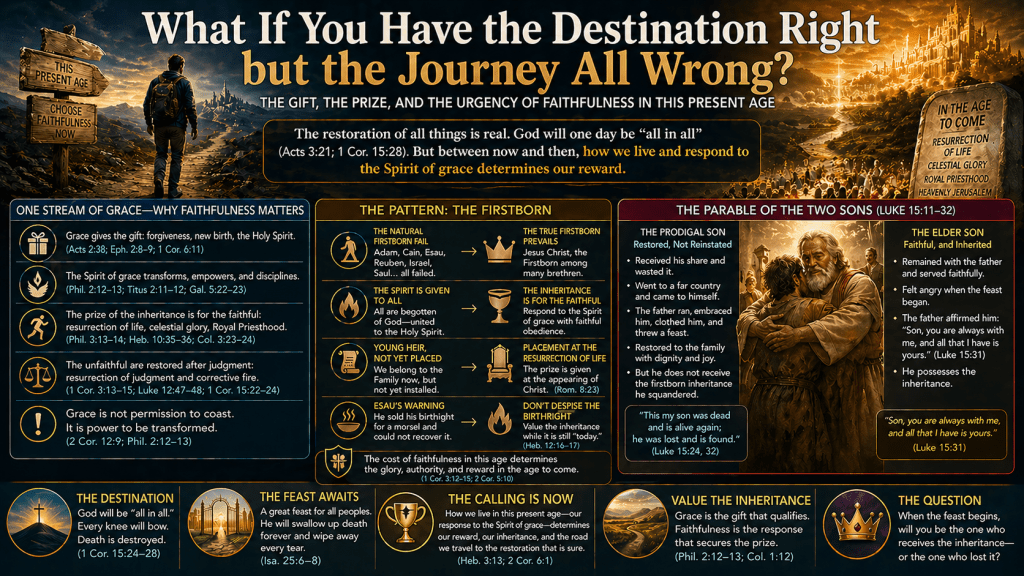
What If You Have the Destination Right but the Journey All Wrong?
If everyone is eventually restored, and I believe they are, then why does Scripture place such an urgent emphasis on faithfulness in this present age? Here’s what I think many of us miss: God is not simply saving everyone now. He is calling out a faithful first-fruits company of sons and daughters, conformed to the image of His faithful Firstborn Son (Romans 8:29), right now, in the midst of this present evil age for a glorious purpose (1 Peter 2:9).
-
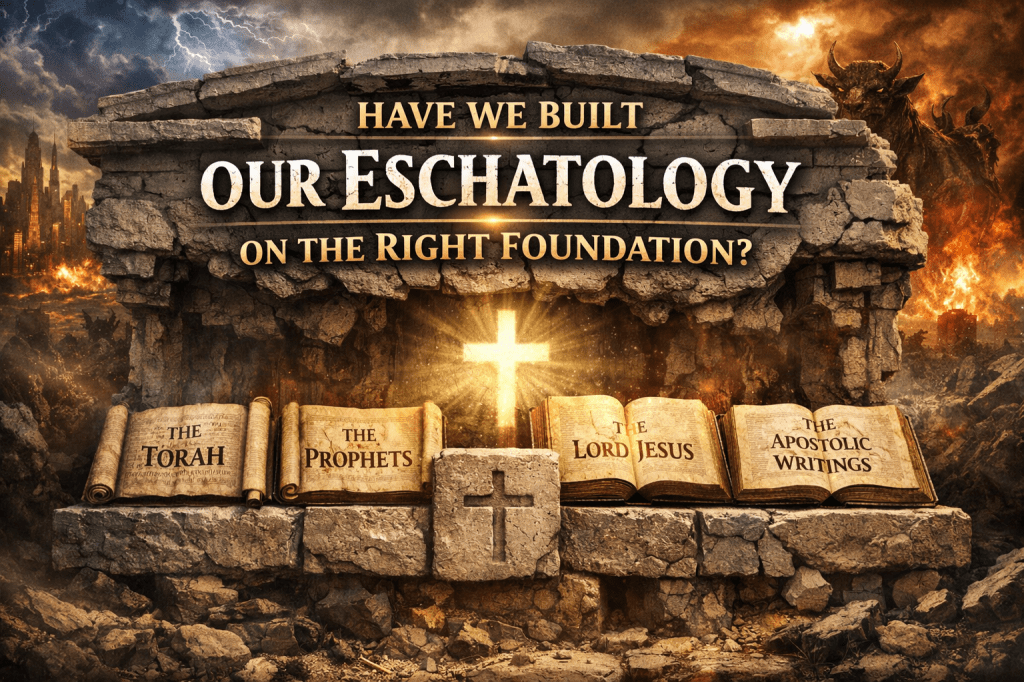
Have We Built Our Eschatology on the Right Foundation?
I affirm the restoration of all things. But here’s a question I think we need to wrestle with more seriously: How much of our eschatological framework still depends on the Book of Revelation? Consider what the early church record actually shows: Dionysius of Alexandria, Origen’s own student, conducted a detailed linguistic analysis and concluded Revelation could not have been written by the Apostle John. His influence shaped the Eastern churches’ skepticism for centuries. Cyril of Jerusalem excluded Revelation from his canonical list entirely in his Catechetical Lectures (c. AD 348). His catechumens were instructed to read only the books he…
 Restoration Theology Press