
-
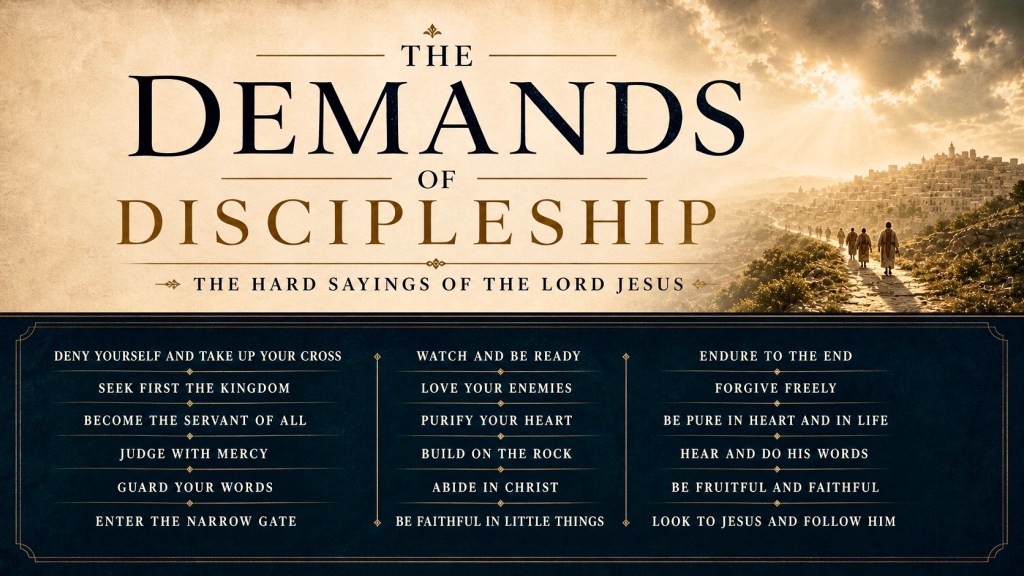
The Lord Jesus did not offer discipleship as a formula of belief. He offered it as the dividing line between life and judgment in the Age to Come. His hard sayings—deny yourself, take up your cross, lose your life to find it, enter by the narrow gate—are not optional counsel for advanced believers. They are the standard by which every one of His followers will be measured at His appearing. And they did not originate with Him. They are the fulfillment of what the Torah demanded, what the Prophets declared, and what the entire witness of Scripture had been building…
-
A Scriptural Portrait of the Disciple of the Lord Jesus
What does a faithful disciple actually look like in the language of the Lord Jesus and His Apostles? Not a checklist. Not a description of “super-Christians.” A composite portrait of the normal life that grace intends to produce in those who yield to it—following, abiding, enduring, watching, and pressing toward the resurrection of life in the Age to Come. This teaching gathers the Scriptural portrait in one place and asks the searching question: are we allowing grace to do its full work in us now, so that we may be counted worthy of the life of the age when the…
-
Judgment According to Deeds and Light
The God of Scripture never judges in ignorance and never punishes without measure. His judgments are always according to truth, always proportionate to the light given and the response made to that light. But does God judge everyone the same way? The Scriptures say no — and the reason is light. The servant who knew his master’s will and did not do it receives many stripes; the one who did not know receives few. Israel, who stood at Sinai and received the covenant, is held to a stricter standard than the nations who walked in the dimmer light of conscience…
-
Judgment Begins at the House of God
The Lord Jesus promises that the one who hears and believes ‘shall not come into judgment, but has passed from death into life’ (John 5:24). Yet the Apostle Paul insists that ‘we must all appear before the judgment seat of Christ, that each one may receive the things done in the body, according to what he has done, whether good or bad’ (2 Corinthians 5:10). How can both be true? The answer lies in a principle that runs from the Torah through the Prophets, the Lord Jesus, and the Apostolic writings: judgment begins at the house of God—not in the…
-
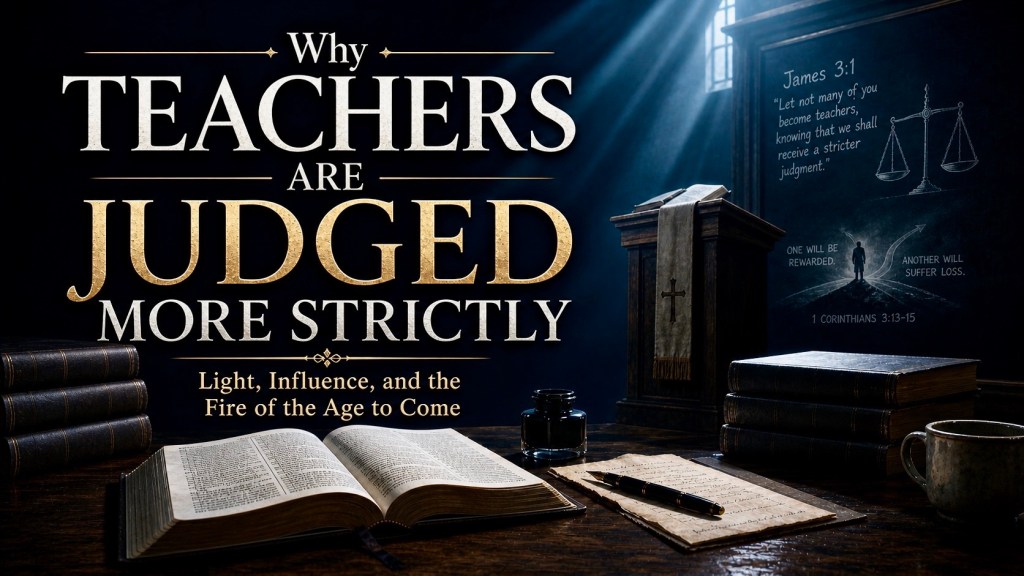
Why Teachers Are Judged More Strictly
Among all the warnings given to believers in the New Testament, few are as sobering as the warning addressed to teachers: “Let not many of you become teachers, knowing that we shall receive a stricter judgment” (James 3:1). Scripture does not say that teachers might receive greater judgment; it says they will. Teaching is a divine stewardship that carries extraordinary privilege but also extraordinary accountability, for teachers shape the understanding, obedience, and destiny of others. In the Age to Come, their words and influence will be weighed with precision by the Lord Jesus, who Himself taught in the fear of…
-
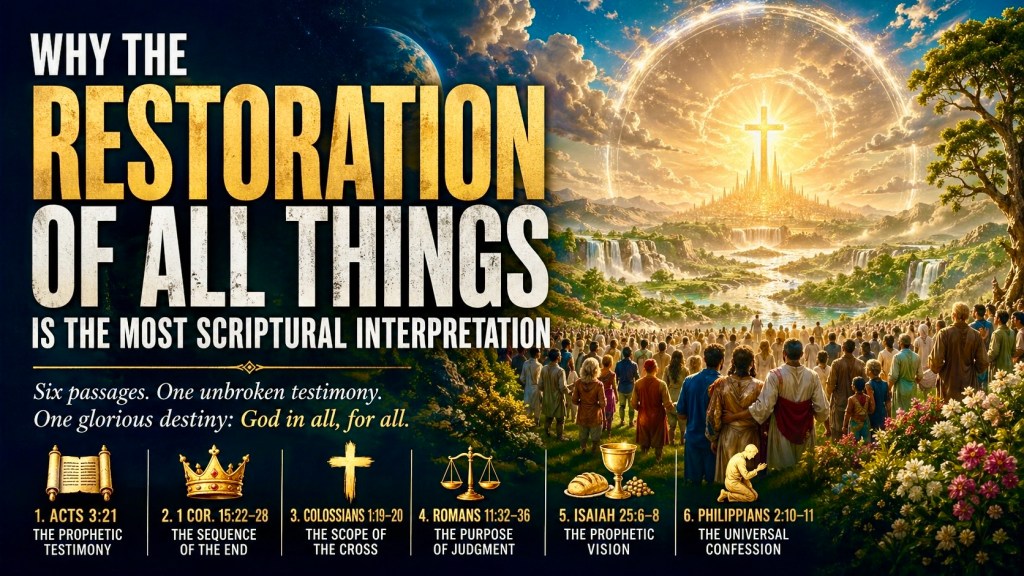
Why the Restoration of All Things Is the Most Scriptural Interpretation
Every major position on the destiny of the lost—eternal torment, annihilationism, and universal restoration—claims to rest on Scripture. But only one of them can account for everything the Bible actually says without quietly reducing the meaning of a single passage. That position is the Restoration of All Things.
-
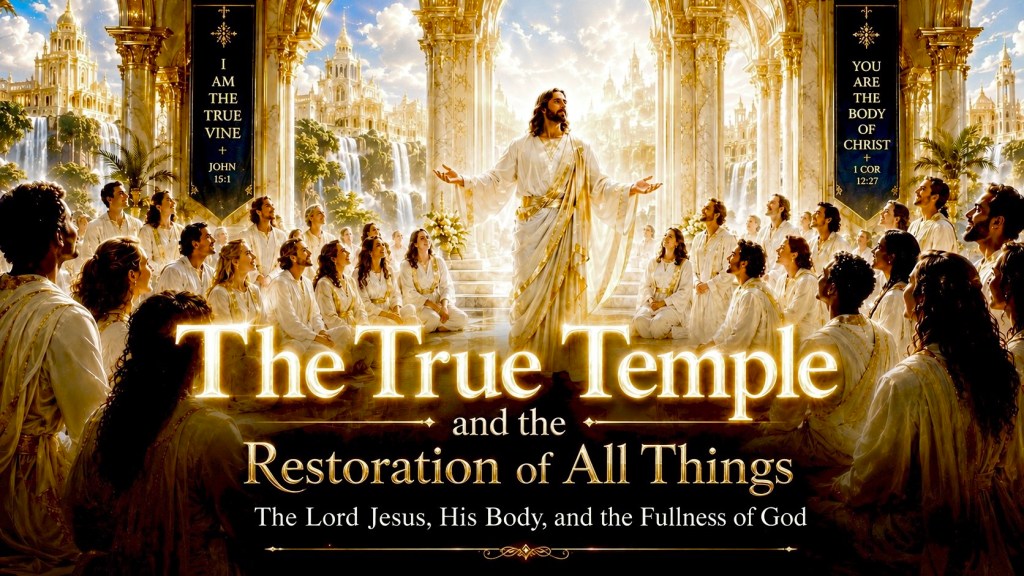
The True Temple and the Restoration of All Things
What did the Lord Jesus actually mean when He said, “In My Father’s house are many mansions”? The apostolic writings use two words for two realities that most readers have never distinguished. Hebrews calls the heavenly sanctuary a tabernacle; Paul, Peter, and the Lord Jesus call His Body a temple—the naos, the inner sanctuary. When these two realities are seen clearly, one of the most familiar passages in Scripture takes on an entirely different meaning. John’s Gospel has already answered the question before the reader ever reaches chapter 14—the Father’s house is the temple, and the temple is His body.…
-
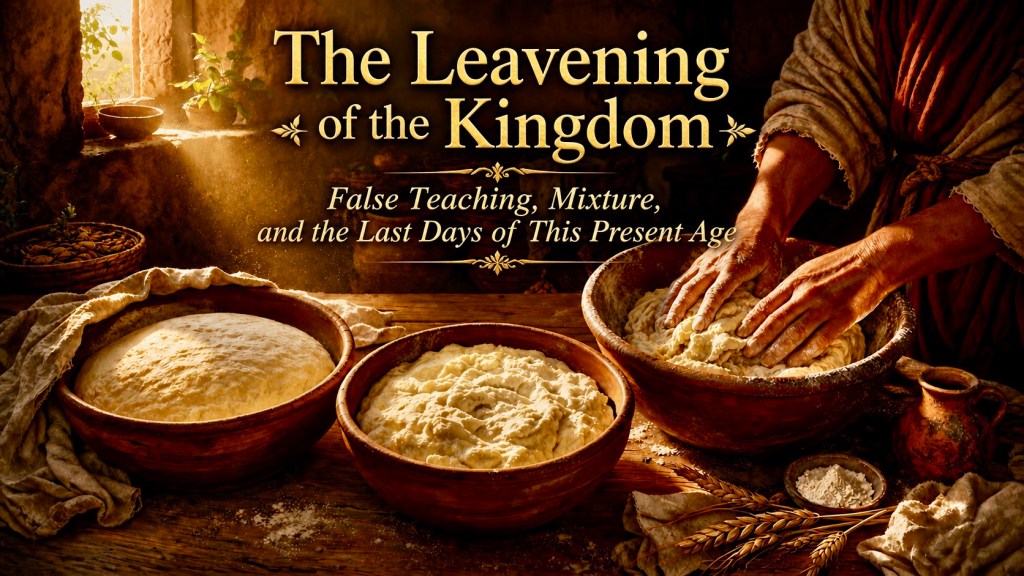
The Leavening of the Kingdom
From the beginning, the serpent’s strategy has been to distort the word of God rather than to deny it outright. In the garden he twisted the Lord’s words to Eve; in Israel he mingled idolatry with covenant worship; in the church age he seeks to corrupt the gospel by adding, subtracting, or rearranging truths that are meant to stand together. The Lord Jesus warned His disciples that deception would be widespread in the last days, not only among obvious enemies of God, but among those who speak in His name and stand within the visible bounds of the kingdom community.…
-
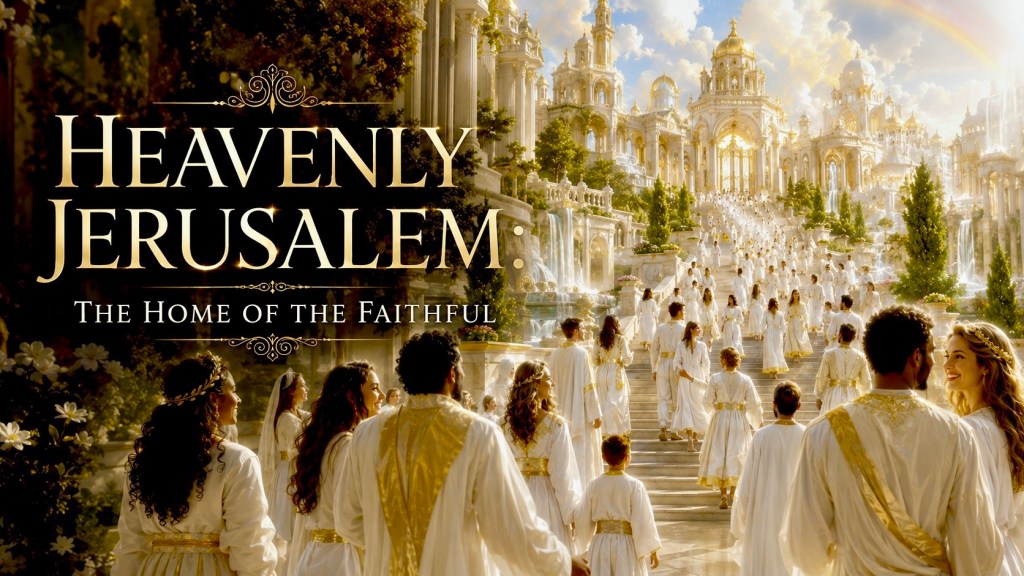
Heavenly Jerusalem: The Home of the Faithful
The Heavenly Jerusalem is not a future city waiting to be created. She is the city of the living God, the Mount Zion above, the heavenly country sought by the patriarchs, and the true tabernacle not made with hands. The Scriptures testify that she already exists in the heaven of heavens, already populated by the angelic host and the spirits of just men made perfect, and already standing as the home prepared for the faithful. From Eden’s garden-sanctuary to Moses’ tabernacle, from Isaiah’s holy mountain to the Lord Jesus’ promise of the Father’s house, Scripture unfolds one consistent pattern: God…
-

Why the Judgment of God is Necessary for the Restoration of All Things
The judgment of God and the love of God are not opposites. Judgment is the severe expression of love—the holy fire by which the Father clears away everything in fallen humanity that cannot inherit the calling for which it was made. The flaming sword at Eden’s gate was never only exclusion; it was a promise that the way back passes through fire, and only what can endure it may inherit. Tracing that fire from Eden through the cross to the fires of the Age to Come—and reading creation’s own witness in bread, wine, and linen—this teaching shows why the judgment…
-
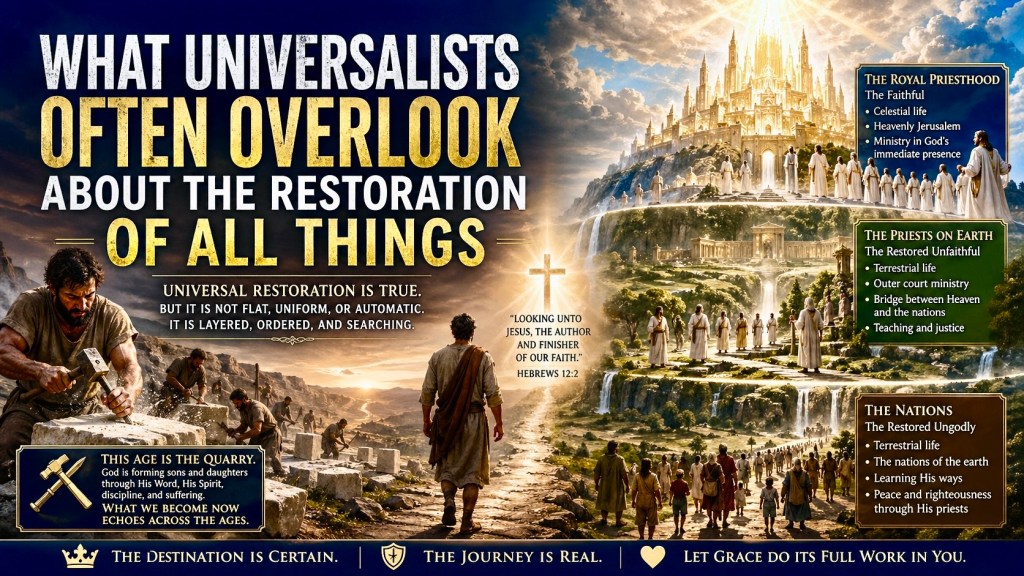
What Universalists Often Overlook About the Restoration of All Things
Those who believe in God’s restoration of all things hold the most optimistic theological doctrine. Biblical universal restoration is indeed true. However, some who harbor this hope have overlooked the journey and the fact that Scripture, from Genesis to the Epistles, consistently emphasizes the existence of a faithful remnant within the people of God. Here are seven often overlooked aspects: the faithful remnant, the weight of judgment, the gift and the prize, the three orders of the age to come, the purpose of this present age, the meaning of “age-lasting,” and the mercy that refuses to be weak.
-
Thoughts of Peace: The Father’s Measured Hand in Every Circumstance
The words of Jeremiah 29:11 were not first spoken to people whose lives were flourishing. They were spoken to a nation in exile, living under a foreign empire, mourning a ruined temple, wondering whether the God of their fathers had abandoned them. In that moment of deepest uncertainty, the LORD broke into their despair with a sentence that would be copied onto the walls of houses and the pages of journals for millennia to come. He was not indifferent, He was not absent, and He was not surprised. He had thoughts toward them—good thoughts—thoughts of peace and not of evil,…
-
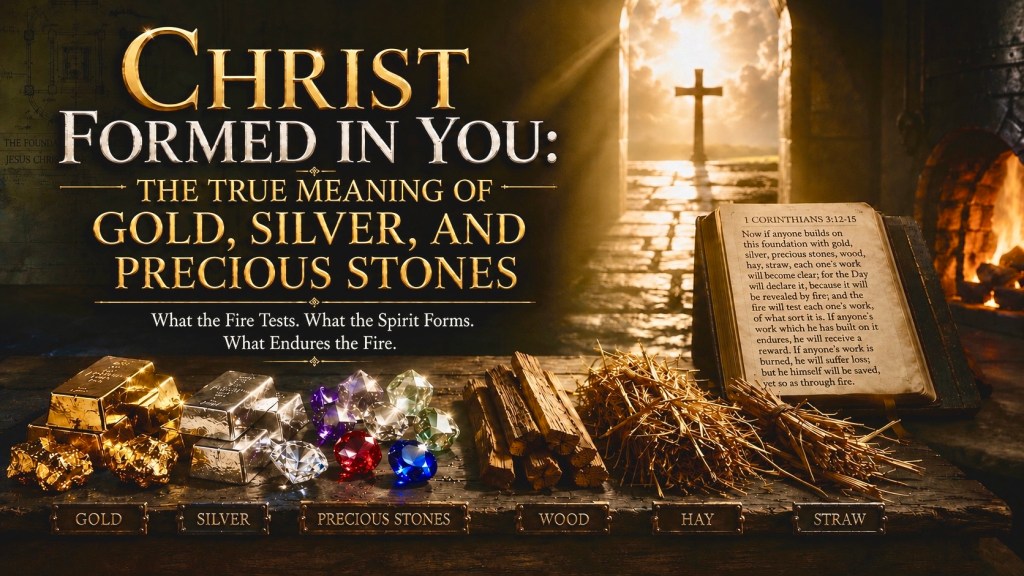
Christ Formed in You: The True Meaning of Gold, Silver, and Precious Stones
Are you building gold or straw? The difference is not your deeds but your substance—whether Christ has truly been formed within. Most teaching on gold, silver, and precious stones reduces them to a checklist of good works and bad, but Scripture reveals something far deeper: these materials describe not what the believer does, but what the believer becomes. Tracing the canonical thread from the Parable of the Sower to the vine, the potter, and the refining fire, this teaching shows that the building materials of 1 Corinthians 3 are the evidence that Christ has been formed within—and what the fire…
-
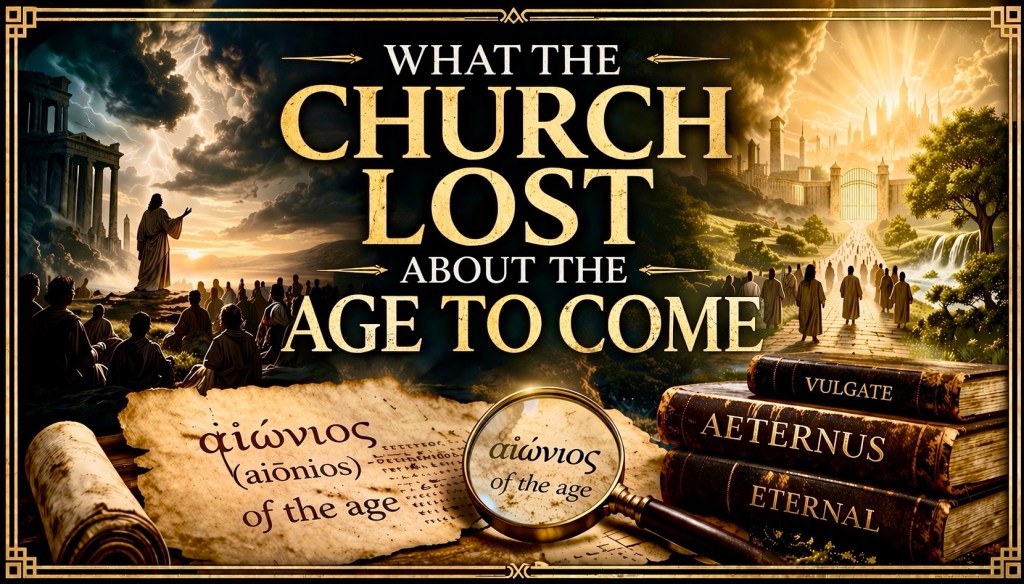
What the Church Lost About the Age to Come
The Lord Jesus never described an abstract eternity. He described a coming age — real, concrete, and arriving. And the word He used to describe it has been mistranslated for over a thousand years. When that word is restored to its original meaning, the parables open up, the warnings make sense, and the tension between judgment and restoration resolves in a way that neither side of the debate expected.
-
The Lord Jesus Settled This: One Hour, One Resurrection, Two Destinies.
In John 5:28–29, the Lord Jesus declared that one hour is coming in which all who are in the graves will hear His voice and come forth — some to the resurrection of life, others to the resurrection of judgment. He said one hour, all the dead, two outcomes. That statement, read carefully and on its own terms, resolves the rapture and resurrection controversy at its root.
 Restoration Theology Press